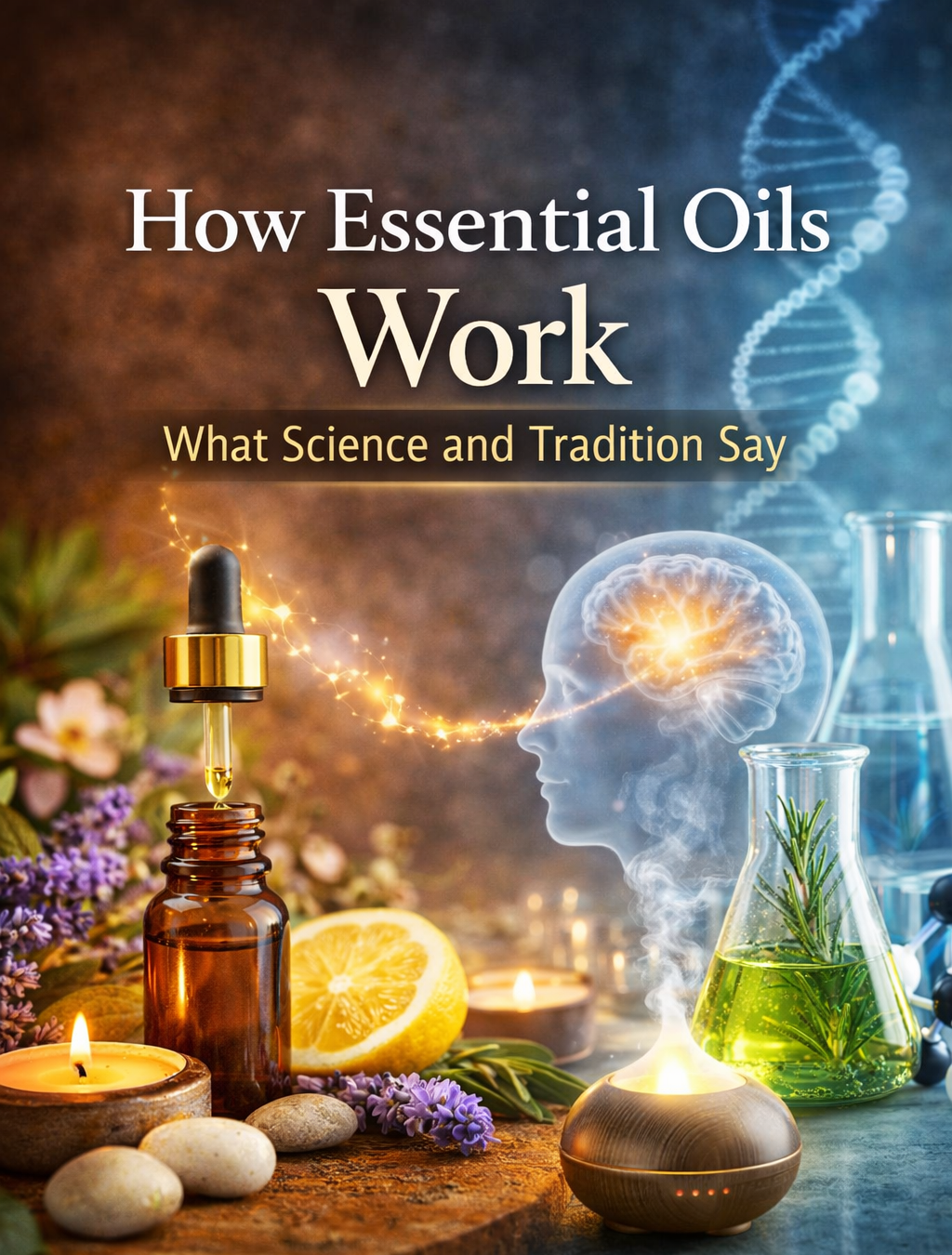
Essential oils have been used for centuries in traditional wellness practices, yet modern science is only beginning to understand how and why they influence our senses, emotions, and daily well-being.
In this article, we explore how essential oils work, combining scientific insight with holistic understanding, and explain why aromatherapy continues to be widely used as a complementary wellness practice.
What Makes Essential Oils Unique?
Essential oils are made up of volatile aromatic compounds naturally produced by plants. These compounds are responsible for the plant’s scent and play a role in its interaction with the environment.
When extracted—most commonly through steam distillation or cold pressing—these compounds become highly concentrated, which is why essential oils are used in very small amounts.
Each essential oil has a unique chemical profile, which explains why different oils have different aromas and traditional uses.
How Essential Oils Affect the Body and Mind
1. The Olfactory System and the Brain
One of the primary ways essential oils work is through inhalation.
When you breathe in an aroma, scent molecules travel through the nasal passages to the olfactory receptors, which send signals directly to the limbic system—a part of the brain involved in:
- Emotions
- Memory
- Mood regulation
- Stress response
This direct pathway helps explain why certain scents are traditionally associated with relaxation, focus, or emotional comfort.
Scientific research suggests that aromatic compounds can influence emotional states by interacting with the brain’s sensory and emotional centers.
2. Emotional and Sensory Responses
Smell is one of the most powerful senses linked to memory and emotion. Because of this, aromatherapy is often used to create supportive environments for:
- Relaxation
- Mindfulness
- Focus
- Restful routines
From a holistic perspective, scent is seen as a way to gently influence emotional balance and overall well-being, rather than targeting symptoms directly.
3. Topical Use and Skin Interaction
When essential oils are diluted properly and applied to the skin, small amounts may be absorbed.
This is why:
- Dilution with a carrier oil is essential
- Gentle oils are recommended for beginners
- Quality and purity matter
Topical aromatherapy is traditionally used as part of self-care rituals, such as massage or relaxation routines.
👉 Many people prefer using essential oils in pre-diluted roll-ons or blends for safe and convenient application.
Science vs. Holistic Tradition: A Complementary View
The Scientific Perspective
Research on aromatherapy continues to grow, particularly in areas such as:
- Stress perception
- Sleep quality
- Emotional well-being
While essential oils are not medicines, studies suggest they may support the body’s natural relaxation responses when used appropriately.
The Holistic Perspective
Holistic traditions view aromatherapy as part of a broader lifestyle that includes:
- Mindful habits
- Emotional awareness
- Environmental balance
Rather than isolating a single issue, aromatherapy is traditionally used to support harmony between mind and body.
Why Quality Essential Oils Matter
Not all essential oils are the same.
High-quality oils are typically:
- Clearly labelled with botanical names
- Sourced responsibly
- Free from synthetic fragrances
- Properly stored to preserve their properties
Low-quality or synthetic products may lack the aromatic complexity needed for a true aromatherapy experience.
👉 Choosing carefully sourced essential oils can significantly improve both safety and effectiveness.
Common Ways People Use Essential Oils
🌬️ Diffusion
Diffusers disperse essential oils into the air, making them one of the most popular ways to enjoy aromatherapy at home.
Diffusion is often used to:
- Create a calm atmosphere
- Freshen indoor spaces
- Support daily routines
👉 Explore Sunoom’s range of [essential oil diffusers] designed for gentle, consistent diffusion.
🌿 Personal Aromatherapy
Roll-ons and personal inhalers offer a discreet way to enjoy aromatherapy throughout the day.
These are especially popular for:
- Busy routines
- Travel
- Work environments
Are Essential Oils a Replacement for Medical Care?
No. Aromatherapy is considered a complementary practice, not a medical treatment.
Essential oils should not be used to:
- Diagnose conditions
- Replace prescribed medication
- Substitute professional medical advice
Instead, they are best viewed as part of a well-rounded wellness routine focused on balance, relaxation, and mindful living.
Getting Started Safely
If you’re new to essential oils:
- Start with a small selection
- Learn proper dilution
- Use simple methods like diffusion
- Choose beginner-friendly oils
👉 Sunoom’s curated collections are designed to help you explore aromatherapy safely and confidently.
Final Thoughts
Essential oils work through a fascinating combination of sensory perception, emotional response, and traditional use. While science continues to explore their full potential, aromatherapy remains valued for its gentle, supportive role in everyday well-being.
When used responsibly and with quality products, essential oils can become a meaningful part of a mindful lifestyle.
🌿 Continue Reading
In our next article, we’ll explore essential oil safety guidelines and how to use aromatherapy responsibly at home.