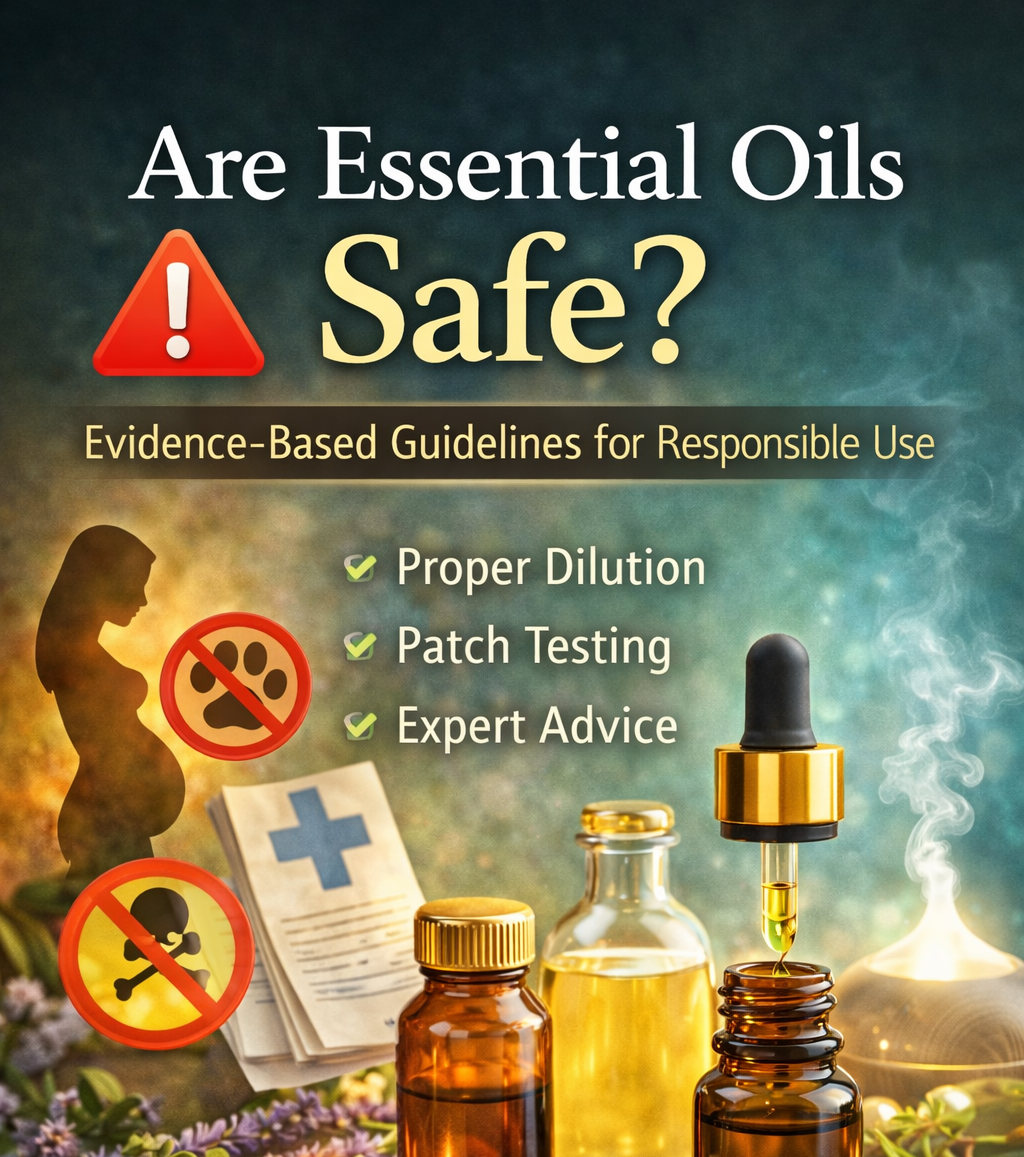
Essential oils are widely used in aromatherapy across Europe, but one of the most common and important questions remains:
Are essential oils safe?
The short answer is: yes, when used correctly and responsibly.
In this guide, we’ll explore what science and experts say about essential oil safety, common mistakes to avoid, and how to use aromatherapy as part of a mindful, well-informed wellness routine.
Why Essential Oil Safety Matters
Essential oils are natural, but they are also highly concentrated plant extracts. A single drop of essential oil can contain the aromatic compounds of a large amount of plant material.
Because of this concentration:
- Proper use is essential
- Quality matters
- Less is often more
Understanding safety guidelines not only protects your well-being, but also helps you enjoy aromatherapy with confidence.
Are Essential Oils Regulated?
In Europe, essential oils are generally regulated as cosmetic or aromatic products, not medicines.
This means:
- They are not intended to diagnose, treat, or cure disease
- Claims must be responsible and non-medical
- Users must follow recommended usage guidelines
Reputable brands focus on quality, transparency, and education, rather than exaggerated promises.
The Three Main Ways Essential Oils Are Used
Understanding how essential oils are used is key to understanding safety.
🌬️ 1. Inhalation & Diffusion
Diffusion is one of the gentlest and most popular ways to use essential oils.
When diffused properly:
- Oils are dispersed in very small amounts
- The aroma gently scents the space
- Exposure is limited and controlled
This method is generally considered suitable for beginners.
👉 Using a high-quality diffuser designed for essential oils helps ensure safe, even diffusion.
🌿 2. Topical Application (With Dilution)
Essential oils should never be applied undiluted to the skin.
Instead, they must be mixed with a carrier oil (such as jojoba or sweet almond oil).
Proper dilution:
- Reduces the risk of skin irritation
- Allows safer absorption
- Makes oils suitable for massage and self-care rituals
Many people prefer pre-diluted roll-ons or blends for convenience and safety.
🚫 3. Ingestion (Why Caution Is Essential)
Ingesting essential oils is not recommended unless under the guidance of a qualified healthcare professional trained in this area.
Improper ingestion may:
- Irritate the digestive system
- Interact with medications
- Cause adverse reactions
For most people, aromatherapy is best enjoyed through inhalation and topical use only.
Common Essential Oil Safety Mistakes
Avoiding these common mistakes can greatly reduce risks:
- Using essential oils directly on the skin without dilution
- Using too much oil at once
- Assuming “natural” means risk-free
- Using adult oils on children without guidance
- Ignoring quality and sourcing
A mindful approach leads to a better and safer experience.
Special Considerations
🤰 Pregnancy
Some essential oils are not recommended during pregnancy. If you are pregnant:
- Use fewer oils
- Choose gentle options
- Consult a qualified professional before use
🐾 Pets
Animals are more sensitive to scent than humans. When diffusing oils:
- Ensure good ventilation
- Allow pets to leave the room
- Avoid diffusing continuously
👶 Children
Children require lower exposure and gentler oils. Products formulated specifically for family use are recommended.
How to Choose Safer Essential Oils
Not all essential oils on the market are equal.
Safer choices typically include:
- Clear botanical naming
- Transparent sourcing
- No synthetic fragrances
- Proper storage in dark glass bottles
👉 Sunoom carefully selects essential oils that meet quality and safety standards, making them suitable for mindful daily use.
How to Use Essential Oils Responsibly at Home
Here are evidence-based guidelines many professionals agree on:
- Start with 1–2 drops when diffusing
- Use short diffusion sessions (20–30 minutes)
- Always dilute for topical use
- Patch test new oils
- Store oils away from heat and sunlight
Aromatherapy works best when it is gentle, intentional, and respectful.
Are Essential Oils Safe for Everyone?
While many adults can enjoy essential oils safely, aromatherapy is not one-size-fits-all.
Always consider:
- Personal sensitivity
- Health conditions
- Current medications
When in doubt, less use and professional guidance are the safest choices.
Final Thoughts
Essential oils can be a valuable part of a holistic wellness routine when used correctly. Education, moderation, and quality products are the foundation of safe aromatherapy.
Rather than focusing on bold claims, responsible aromatherapy emphasizes:
- Balance
- Awareness
- Long-term well-being
🌿 Explore Aromatherapy with Confidence
Discover Sunoom’s thoughtfully selected essential oils and accessories, designed to support safe and mindful aromatherapy at home.
🔍 Coming Next
In Day 4, we’ll explore how to choose high-quality essential oils and what to look for before buying.