If you’re using essential oils on your skin, there’s one ingredient you should never skip: carrier oils.
Carrier oils are not just optional — they are a fundamental part of safe and effective aromatherapy. In this guide, we’ll explain what carrier oils are, why they matter, how to choose the right one, and which carrier oils are best for different uses.
What Is a Carrier Oil?
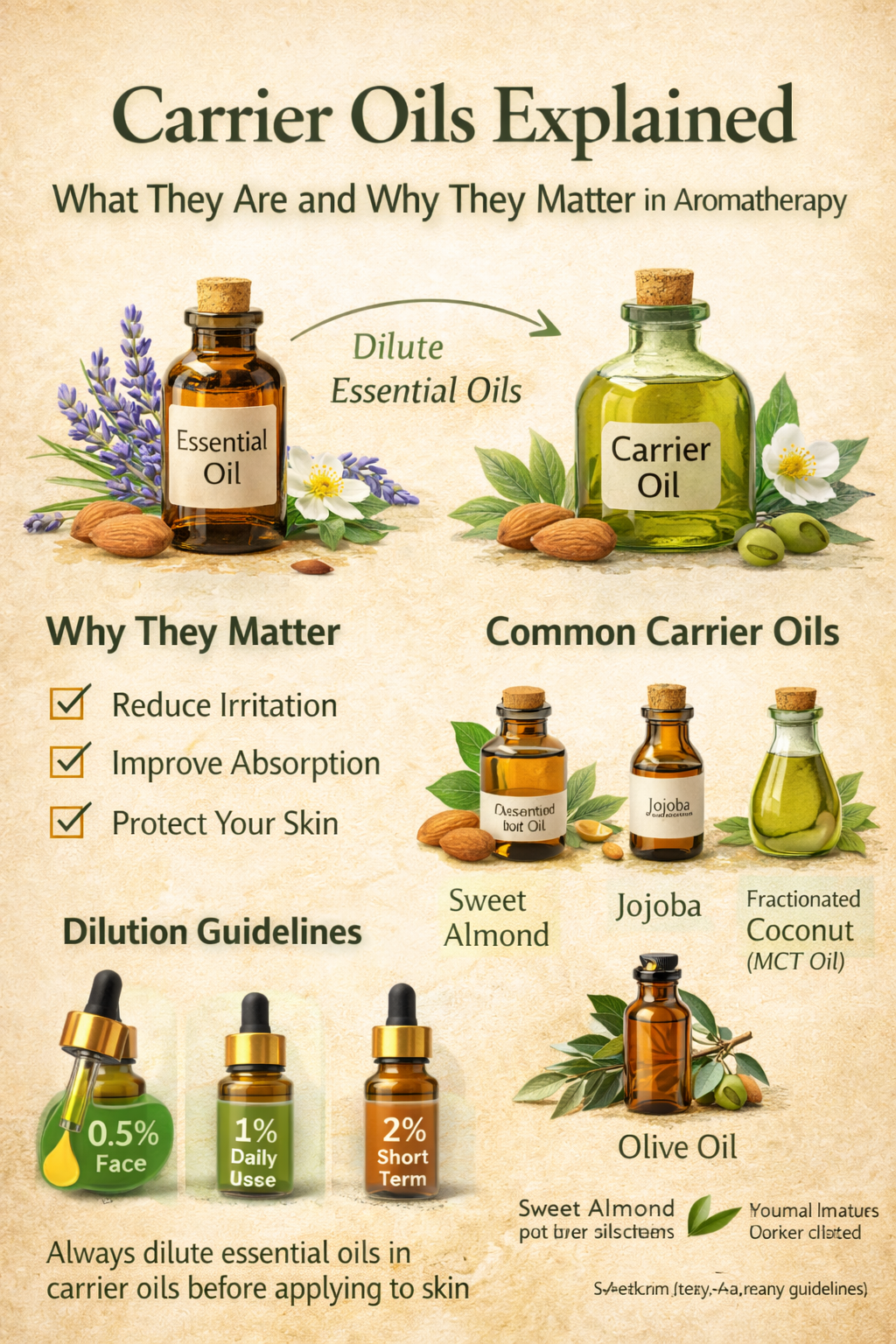
A carrier oil is a plant-based oil used to dilute essential oils before topical application.
Unlike essential oils:
- Carrier oils are not volatile
- They have little or no aroma
- They do not evaporate
- They help “carry” essential oils onto the skin safely
Because essential oils are highly concentrated, carrier oils help reduce irritation and allow for controlled absorption.
Authoritative source:
National Association for Holistic Aromatherapy (NAHA)
https://naha.org/explore-aromatherapy/carrier-oils/
Why Carrier Oils Are Essential for Safety
Applying essential oils directly to the skin can increase the risk of:
- Redness
- Sensitivity
- Allergic reactions
- Long-term sensitisation
Carrier oils:
- Dilute essential oils to safe levels
- Protect the skin barrier
- Improve spreadability
- Support gentle absorption
Safety authority:
Tisserand Institute – Essential Oil Safety
https://tisserandinstitute.org/safety-guidelines/
Common Carrier Oils Used in Aromatherapy
Each carrier oil has unique properties. Choosing the right one depends on your skin type and intended use.
🌿 Sweet Almond Oil (Prunus amygdalus dulcis)
Best for: Body oils, massage, general use
Texture: Light to medium
Skin type: Normal to dry skin
Sweet almond oil is one of the most popular carrier oils due to its versatility and gentle nature.
Reference:
Healthline – Sweet Almond Oil Benefits
https://www.healthline.com/nutrition/almond-oil-benefits
🌿 Jojoba Oil (Simmondsia chinensis)
Best for: Facial oils, roll-ons
Texture: Very light
Skin type: Oily, sensitive, acne-prone
Jojoba oil closely resembles the skin’s natural sebum, making it an excellent choice for facial applications.
Scientific overview:
Journal of the Italian Society of Dermatology
https://pubmed.ncbi.nlm.nih.gov/24442052/
🌿 Fractionated Coconut Oil (MCT Oil)
Best for: Roll-ons, travel blends
Texture: Very light, non-greasy
Skin type: Most skin types
Unlike regular coconut oil, fractionated coconut oil remains liquid and absorbs quickly.
Dermatology reference:
Medical News Today – Carrier Oils
https://www.medicalnewstoday.com/articles/carrier-oils
🌿 Olive Oil (Olea europaea)
Best for: Traditional remedies, body use
Texture: Rich and nourishing
Skin type: Very dry skin
Olive oil has a long history in traditional wellness practices, though its aroma may influence blends.
How to Dilute Essential Oils Using Carrier Oils
Dilution is measured in percentages.
Common dilution guidelines:
- 0.5% → Face & sensitive skin
- 1% → Daily body use
- 2% → Short-term targeted use
Example:
- 1% dilution = 1 drop essential oil per 5 ml carrier oil
Trusted dilution chart:
Tisserand Institute
https://tisserandinstitute.org/essential-oil-dilution-chart/
Choosing the Right Carrier Oil for Your Routine
Ask yourself:
- Where will I apply this blend?
- What is my skin type?
- Do I want fast absorption or deep nourishment?
- Will this be used daily or occasionally?
Matching the carrier oil to your routine improves both comfort and effectiveness.
Shelf Life and Storage of Carrier Oils
Carrier oils are natural products and can oxidise over time.
Storage tips:
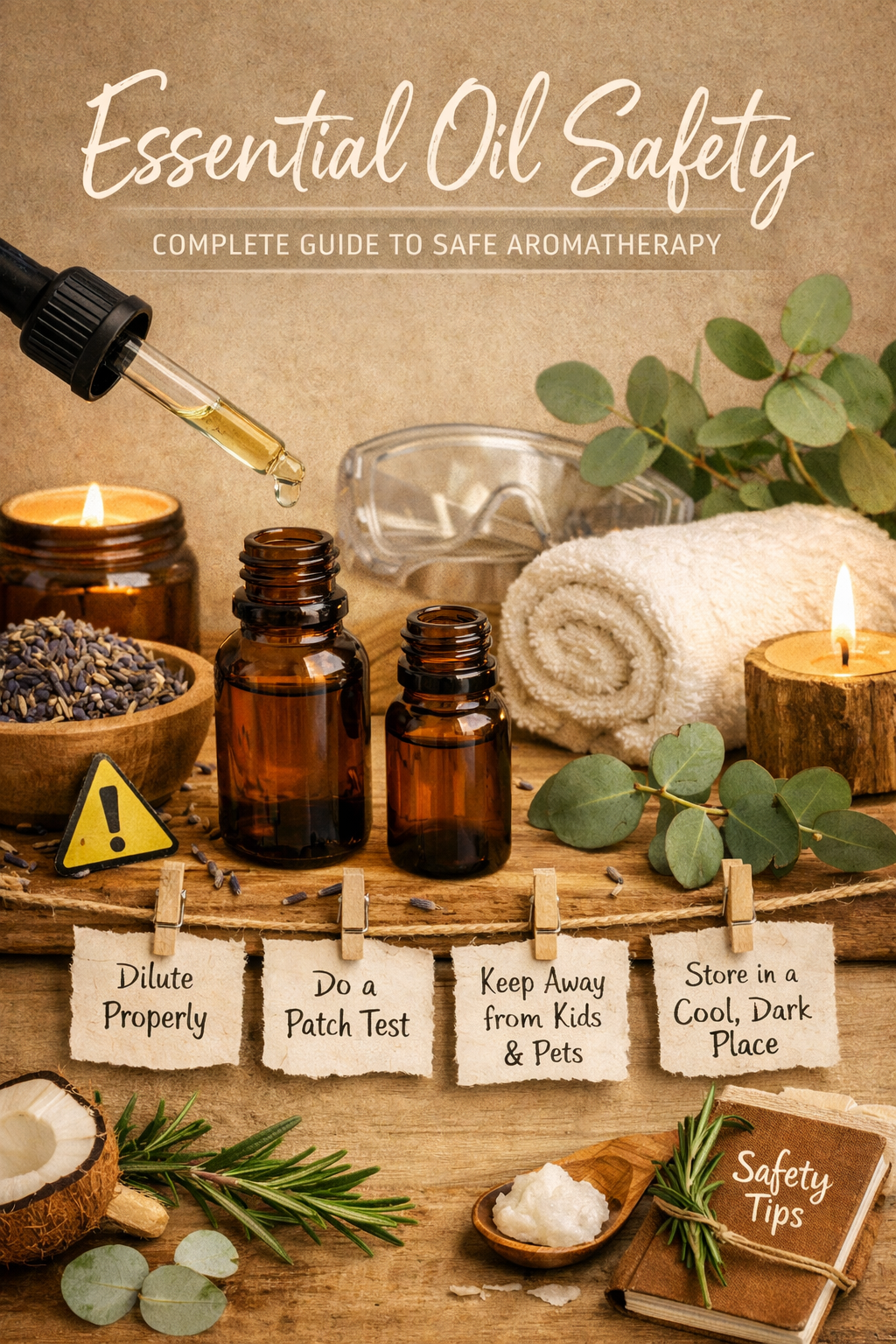
- Store in a cool, dark place
- Keep bottles tightly closed
- Avoid exposure to heat and sunlight
Signs an oil has gone bad:
- Strong or rancid smell
- Change in colour
- Sticky texture
Oxidised oils should not be used on the skin.
Can You Mix Carrier Oils?
Yes — blending carrier oils is common.
For example:
- Jojoba + Sweet Almond for face & body balance
- Coconut + Jojoba for roll-ons
- Almond + Olive for rich massage blends
Blending allows you to customise texture and absorption.
Final Thoughts
Carrier oils are the foundation of safe topical aromatherapy. They protect your skin, enhance the experience, and allow essential oils to be used responsibly.
Choosing the right carrier oil transforms essential oil use from risky to refined — and from harsh to nourishing.
🌿 Create Your Own Blends Safely
Explore Sunoom’s:
- Natural carrier oils
- Roll-on bottles
- Essential oil blends
Perfect for creating safe, personalised aromatherapy rituals.
🔍 Coming Next (Day 10)
We’ll explore essential oil blends vs single oils — which is better and when to use each.