Essential Oil Safety: Complete Guide to Safe Aromatherapy
Essential Oil Safety (Quick Summary)
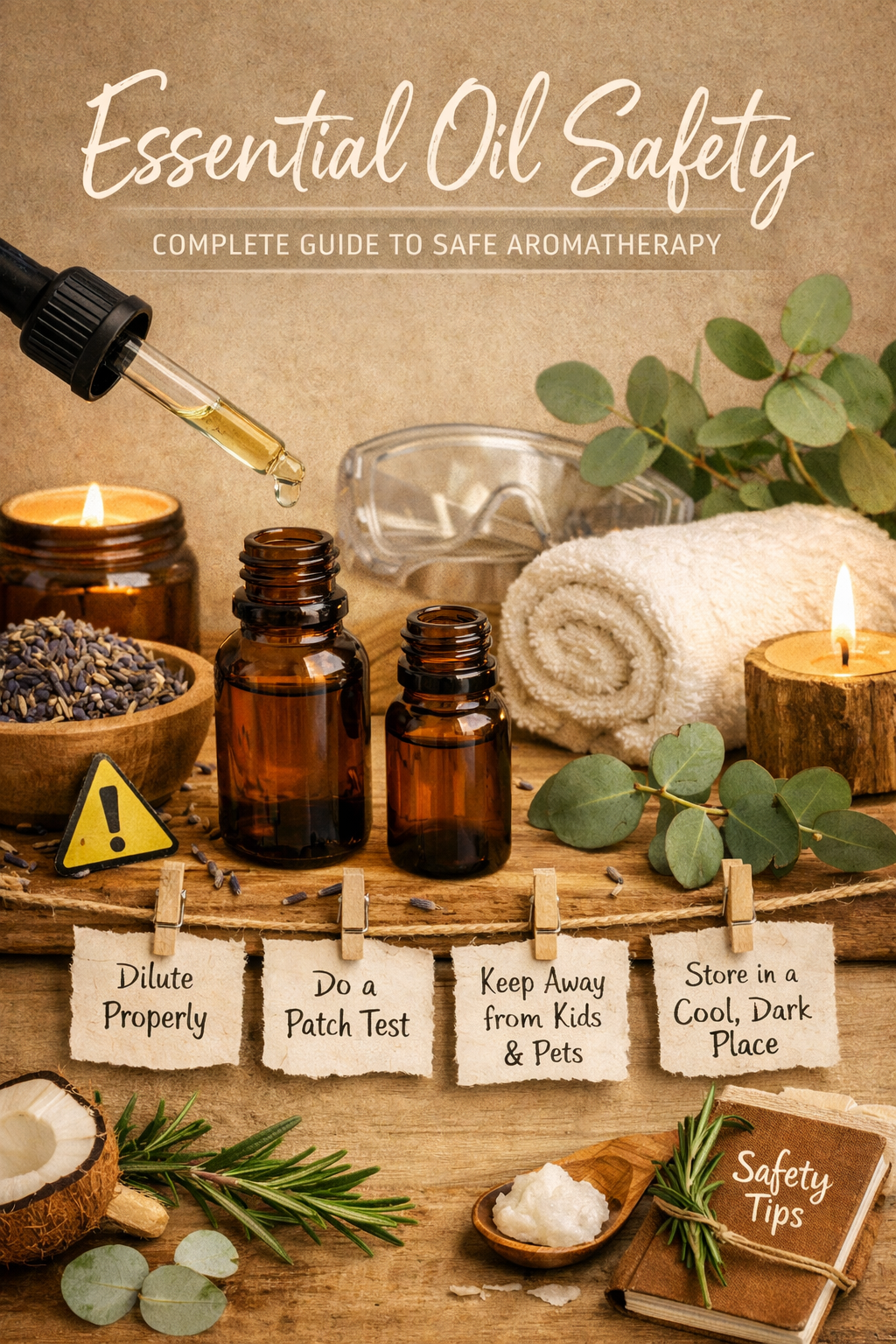
Essential oil safety refers to the responsible use of concentrated plant extracts in aromatherapy. Safe use includes diluting oils before applying to skin, performing patch tests, avoiding sensitive areas, and using diffusers in moderation. These practices help prevent irritation and ensure safe aromatherapy experiences.
Essential oils are widely used in aromatherapy for relaxation, stress relief, and wellness. However, because they are highly concentrated plant extracts, using them incorrectly can lead to irritation, allergic reactions, or other health risks.
Understanding essential oil safety ensures you can enjoy aromatherapy benefits while protecting your health.
This guide explains how to use essential oils responsibly, including dilution guidelines, patch testing, and safe usage practices.
What Are Essential Oils?
Essential oils are concentrated extracts obtained from plants through processes such as steam distillation or cold pressing.
These oils capture the plant’s aromatic compounds and are widely used in Aromatherapy, a wellness practice that uses plant aromas to support relaxation and emotional well-being.
Because essential oils are highly concentrated, a single bottle may contain the equivalent of many pounds of plant material. This is why safe use is important.
Why Essential Oil Safety Matters
Essential oils are extremely potent. In fact, the oil inside a bottle can be 50–100 times more concentrated than the natural plant itself, meaning improper use can cause irritation or sensitization.
Using oils safely helps prevent:
Skin irritation
Allergic reactions
Photosensitivity
Respiratory discomfort
Toxic exposure from misuse
Learning safe practices allows you to enjoy aromatherapy benefits without unnecessary risks.
5. Do Not Ingest Essential Oils Without Professional Advice
Some online sources promote ingesting essential oils, but this can be risky.
Essential oils are extremely concentrated and may be harmful if consumed improperly. Ingestion should only occur under guidance from a qualified professional trained in aromatherapy or healthcare.
Proper storage protects the quality and safety of essential oils.
Store oils:
In dark glass bottles
Away from direct sunlight
In a cool, dry location
Out of reach of children and pets
Exposure to heat or light can cause oils to degrade and become more irritating.
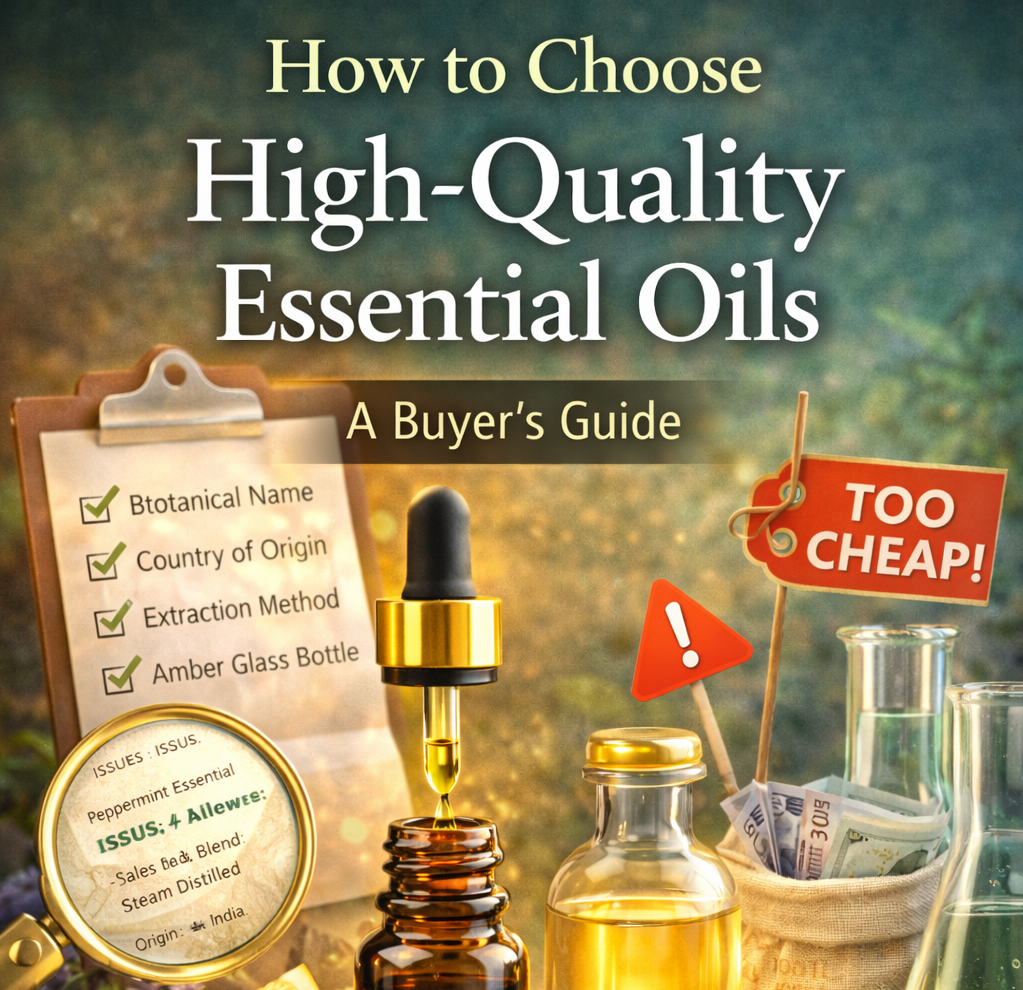
7. Choose High-Quality Essential Oils
Quality directly affects safety.
Look for oils that are:
100% pure (no synthetic fragrance)
Clearly labelled with botanical name
Sourced responsibly
Tested for quality and authenticity
👉 Low-quality oils increase the risk of irritation and reduce therapeutic value.
Essential Oil Safety Tips (Quick Summary)
For safe aromatherapy use, remember these key guidelines:
✔ Always dilute essential oils before applying to skin ✔ Perform a patch test before using a new oil ✔ Use diffusers in moderation ✔ Avoid sensitive areas of the body ✔ Never ingest oils without professional guidance ✔ Store oils properly to maintain quality
Common Safety Mistakes to Avoid
❌ Applying oils neat to the skin ❌ Using too many drops ❌ Mixing many oils at once ❌ Ignoring dilution guidelines ❌ Using oils daily without breaks
Aromatherapy works best when it’s gentle and consistent, not intense.
Essential Oil Safety – Key Facts
Essential oils are highly concentrated plant extracts used in aromatherapy.
Most essential oils should be diluted with a carrier oil before topical use.
Typical dilution ranges from 0.5% to 3% depending on sensitivity.
Diffusion is one of the safest ways to use essential oils.
Patch testing helps identify allergic reactions before full use.
Frequently Asked Questions About Essential Oil Safety
Are essential oils safe for skin?
Essential oils can be safe for skin when properly diluted with a carrier oil. Applying undiluted oils directly to the skin may cause irritation or allergic reactions.
What is the safest way to use essential oils?
The safest way to use essential oils is through aromatic diffusion or properly diluted topical application.
Can you use essential oils every day?
Many people use essential oils daily in small amounts. However, moderation is important, and it is best to rotate oils and avoid prolonged exposure.
Are essential oils safe for children and pets?
Some essential oils may not be suitable for children or animals. Always research specific oils and consult professionals when using aromatherapy around vulnerable groups.
What is the safest way to use essential oils?
The safest way to use essential oils is through aromatic diffusion or diluted topical application with a carrier oil. This reduces the risk of irritation while allowing users to experience the oil’s aroma.
Why should essential oils be diluted?
Essential oils are highly concentrated and may irritate the skin if applied undiluted. Diluting them with a carrier oil reduces their strength and helps prevent skin reactions.
Can essential oils be used every day?
Essential oils can be used daily in small amounts, but it is best to rotate oils and avoid continuous exposure to prevent sensitivity.
Conclusion
Essential oils can be a powerful addition to a natural wellness routine when used responsibly. By following basic safety practices—such as dilution, patch testing, and moderate diffusion—you can safely enjoy the benefits of aromatherapy.
Responsible use ensures that essential oils remain both effective and safe for everyday wellness.
Cancer treatments such as chemotherapy, radiation therapy, and infusion therapies can bring a range of challenging side effects. Many patients undergoing treatment experience nausea, anxiety,
Dermatitis is a common inflammatory skin condition that affects millions of people worldwide. It can cause redness, itching, dryness, irritation, and inflammation, often making the
Aromatherapy isn’t just for special occasions — it shines when it becomes part of your daily routine, helping you feel grounded, energized, and more connected
If you’re new to aromatherapy, choosing essential oils can feel overwhelming. With so many options available, a common question arises: Which essential oils are best
With the growing popularity of aromatherapy, essential oils are everywhere — but not all essential oils are created equal. If you’ve ever wondered why some