
Aromatherapy

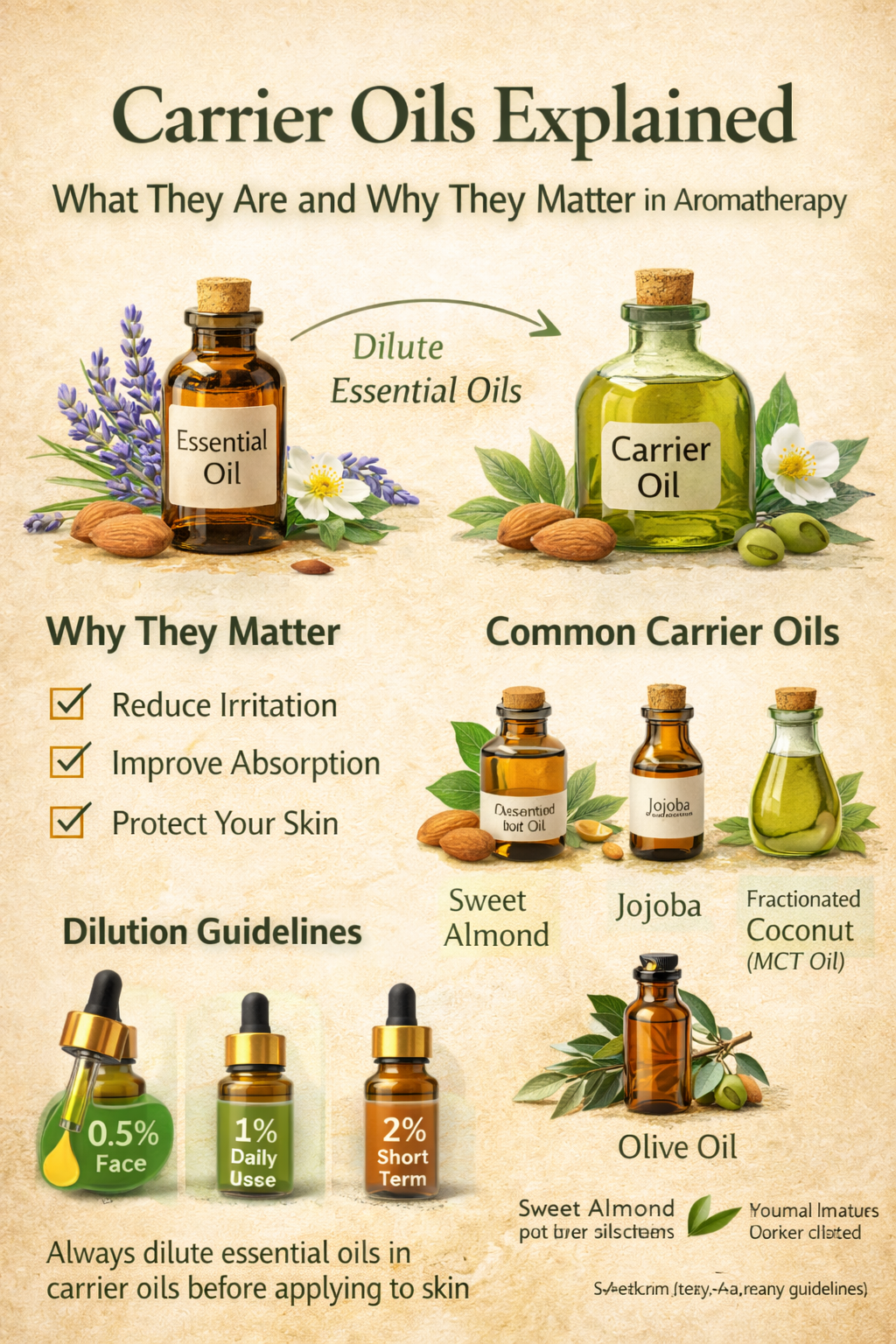
Carrier Oils Explained: What They Are and Why They Matter in Aromatherapy
If you’re using essential oils on your skin, there’s one ingredient you should never skip: carrier oils. Carrier oils are not just optional — they
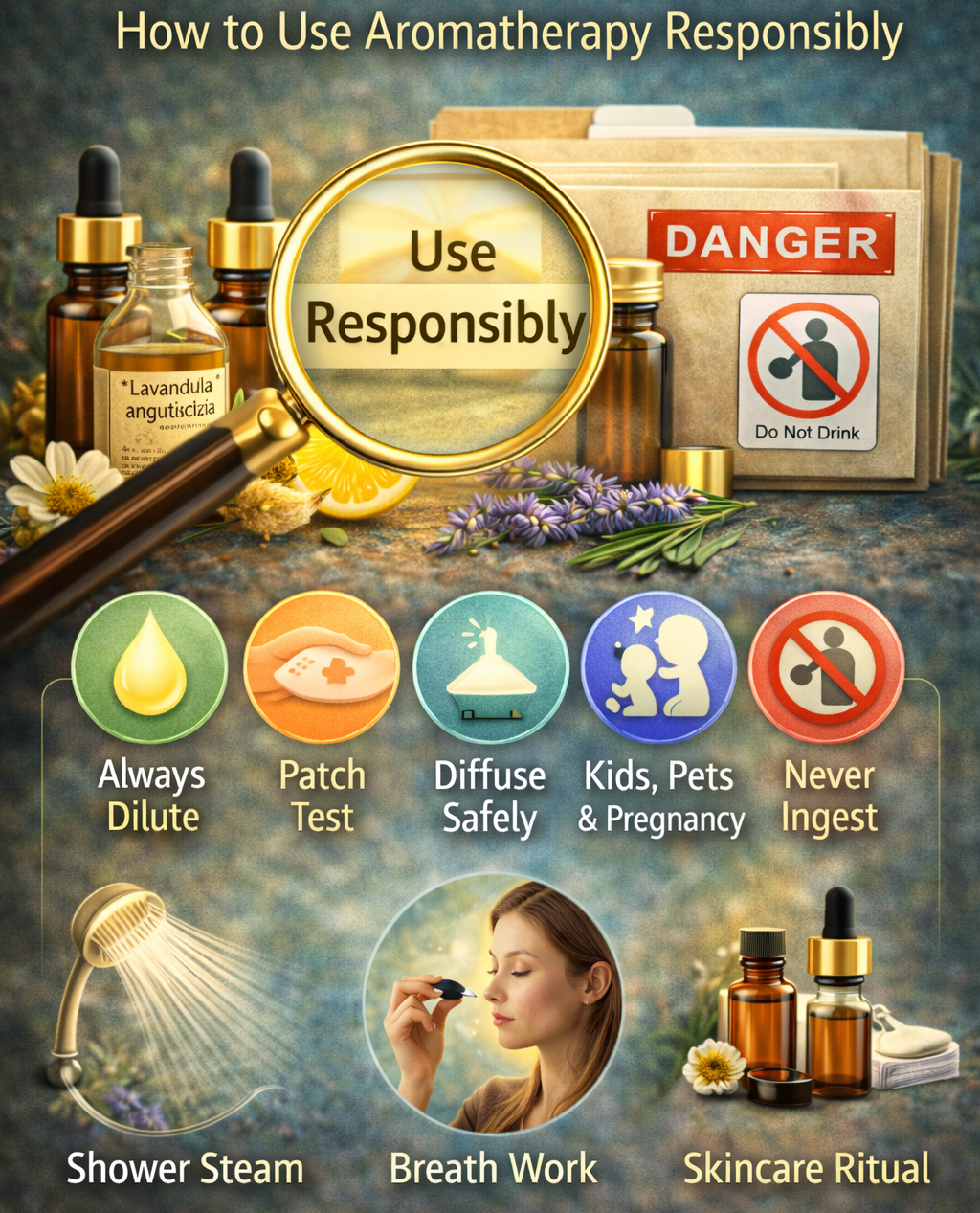
Essential oils are powerful natural substances. While they are widely used in holistic wellness practices, safe and informed use is essential, especially for beginners.
In this guide, we’ll explain essential oil safety basics, how to dilute oils properly, common mistakes to avoid, and how to enjoy aromatherapy responsibly as part of a balanced lifestyle.
Essential oils are highly concentrated plant extracts. Producing just one bottle may require kilograms of plant material, which means a little goes a long way.
Using essential oils incorrectly can lead to:
Responsible use protects both your body and your long-term aromatherapy experience.
Authoritative reference:
International Federation of Aromatherapists (IFA) – Safety Guidelines
https://ifaroma.org/en_GB/safety
One of the most important safety rules:
Never apply essential oils directly to the skin without dilution.
Trusted source:
Tisserand Institute – Essential Oil Dilution Chart
https://tisserandinstitute.org/safety-guidelines/
👉 Carrier oils such as jojoba, sweet almond, or fractionated coconut oil are ideal for dilution.
Even natural substances can cause sensitivity.
This simple step helps prevent unwanted reactions.
Reference:
National Association for Holistic Aromatherapy (NAHA)
https://naha.org/explore-aromatherapy/safety/
Diffusion is one of the safest ways to enjoy aromatherapy — when done correctly.
Over-diffusing can overwhelm the senses and reduce benefits.
Scientific overview:
MDPI – Aromatherapy and Inhalation Research
https://www.mdpi.com/journal/ijerph
Certain populations require extra caution.
Veterinary & pregnancy reference:
ASPCA – Essential Oils and Pets
https://www.aspca.org/pet-care/animal-poison-control/essential-oils
Internal use of essential oils is highly controversial and should never be done casually.
In Europe especially, internal use is generally not recommended without qualified supervision.
Evidence-based guidance:
European Medicines Agency (EMA) – Herbal Safety
https://www.ema.europa.eu
Improper storage can reduce quality and safety.
Oxidised oils can increase the risk of skin irritation.
Quality directly affects safety.
Look for oils that are:
👉 Low-quality oils increase the risk of irritation and reduce therapeutic value.
❌ Applying oils neat to the skin
❌ Using too many drops
❌ Mixing many oils at once
❌ Ignoring dilution guidelines
❌ Using oils daily without breaks
Aromatherapy works best when it’s gentle and consistent, not intense.
Essential oils are powerful tools that deserve respect. When used responsibly, they can become a safe and enjoyable part of your holistic lifestyle.
Knowledge is the foundation of safe aromatherapy — and safety builds trust, confidence, and long-term benefits.
Explore Sunoom’s:
Designed to support safe and mindful aromatherapy.
We’ll explore carrier oils explained — how to choose the right one and why they matter.

If you’re using essential oils on your skin, there’s one ingredient you should never skip: carrier oils. Carrier oils are not just optional — they
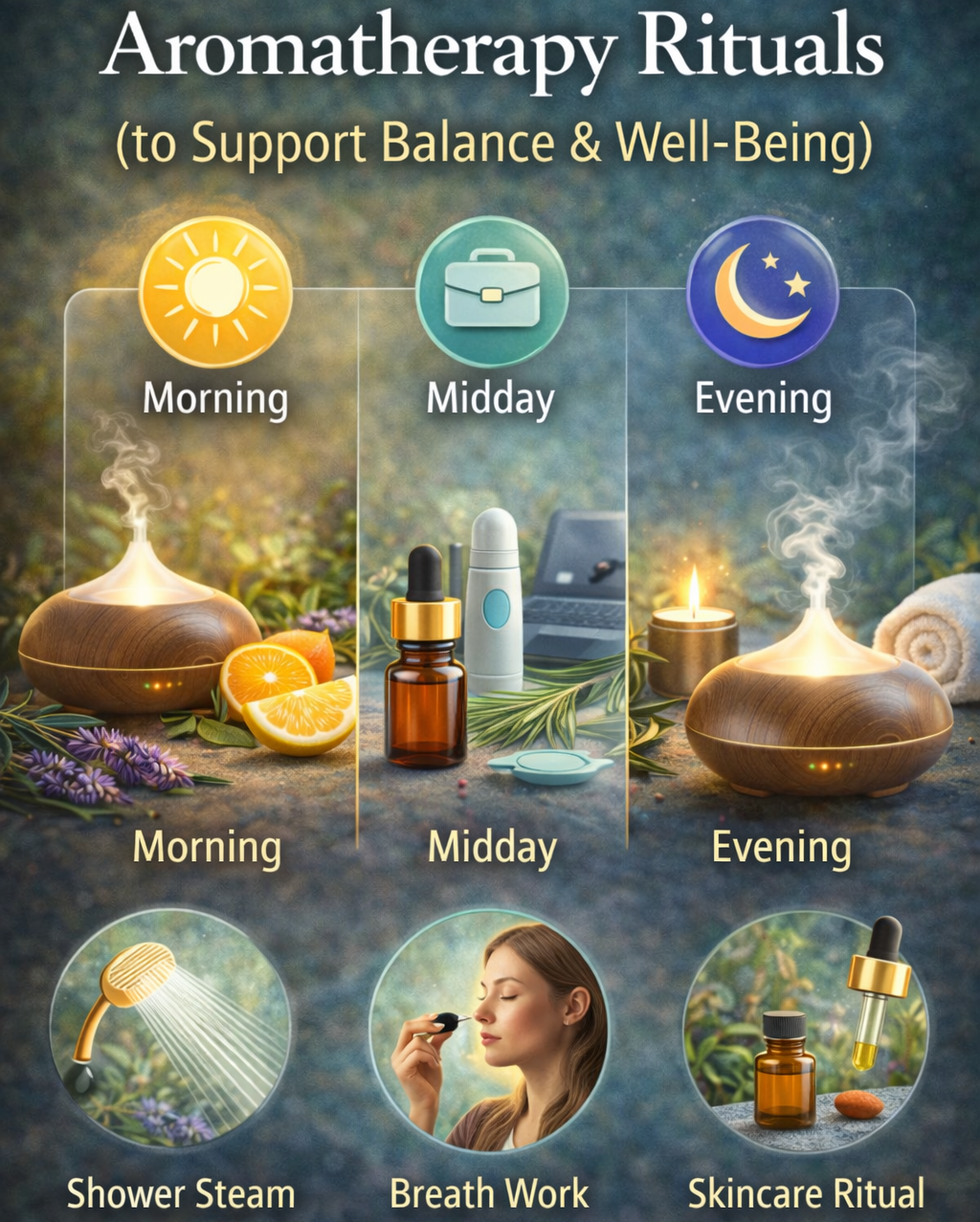
Aromatherapy isn’t just for special occasions — it shines when it becomes part of your daily routine, helping you feel grounded, energized, and more connected
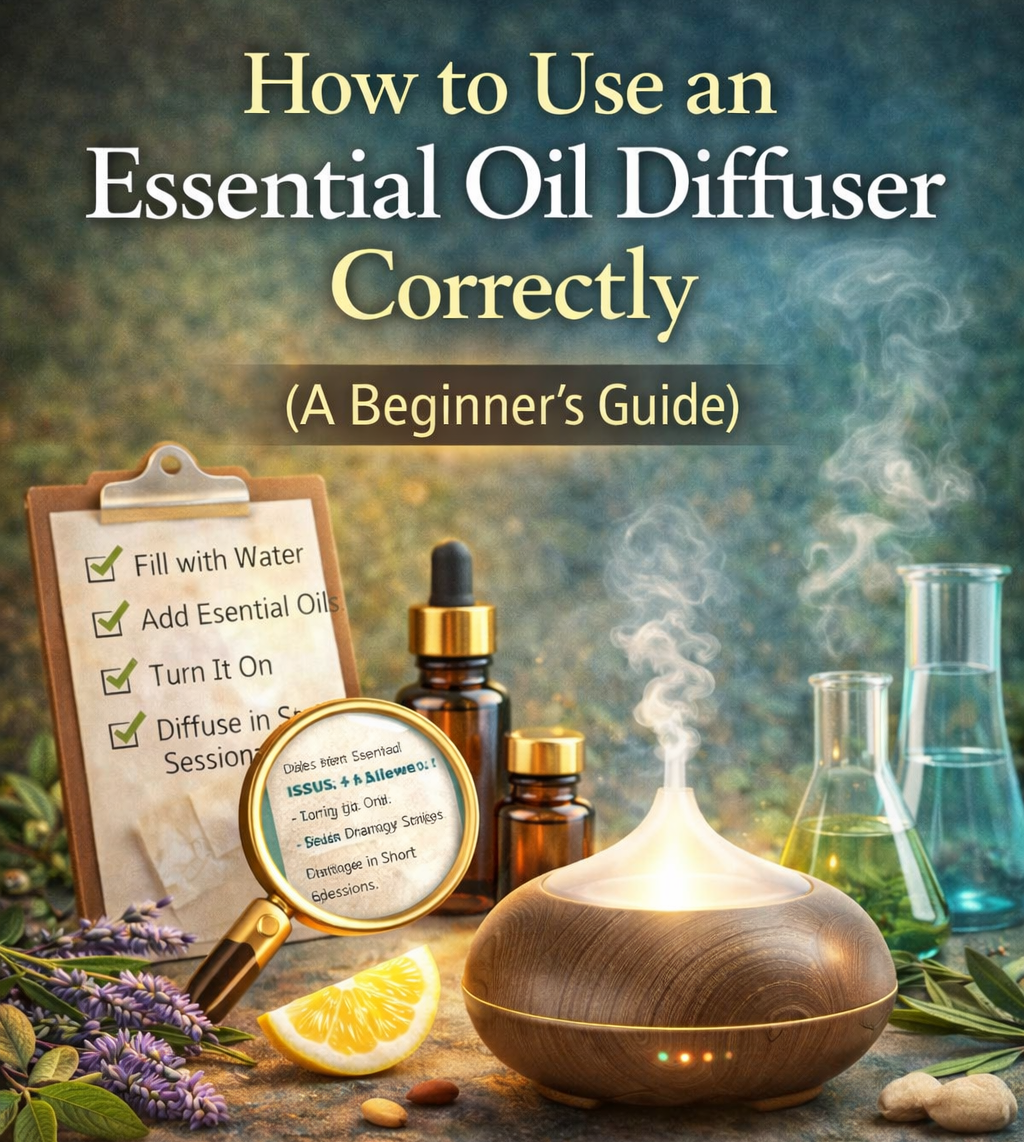
Essential oil diffusers are one of the most popular ways to enjoy aromatherapy — but using them correctly makes all the difference. In this guide,
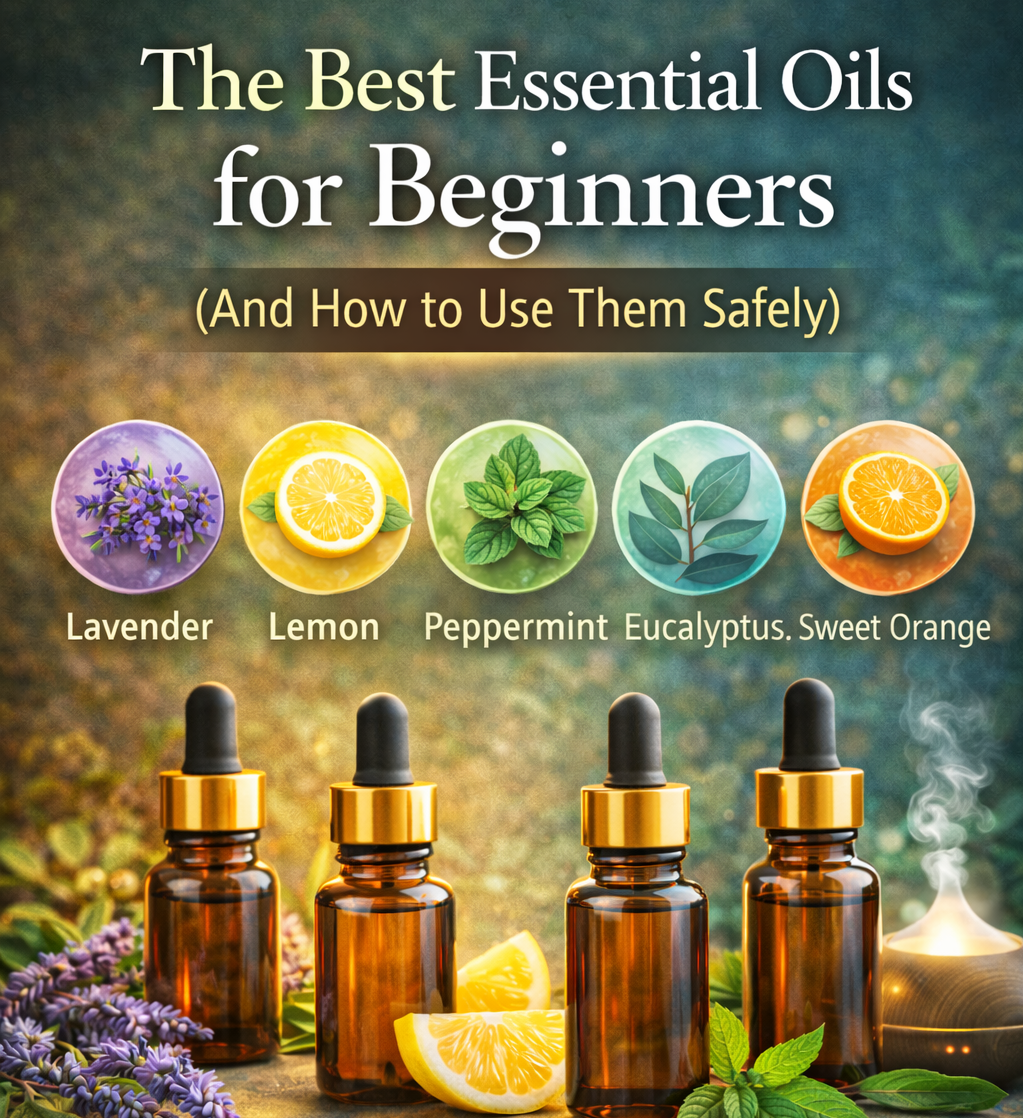
If you’re new to aromatherapy, choosing essential oils can feel overwhelming. With so many options available, a common question arises: Which essential oils are best
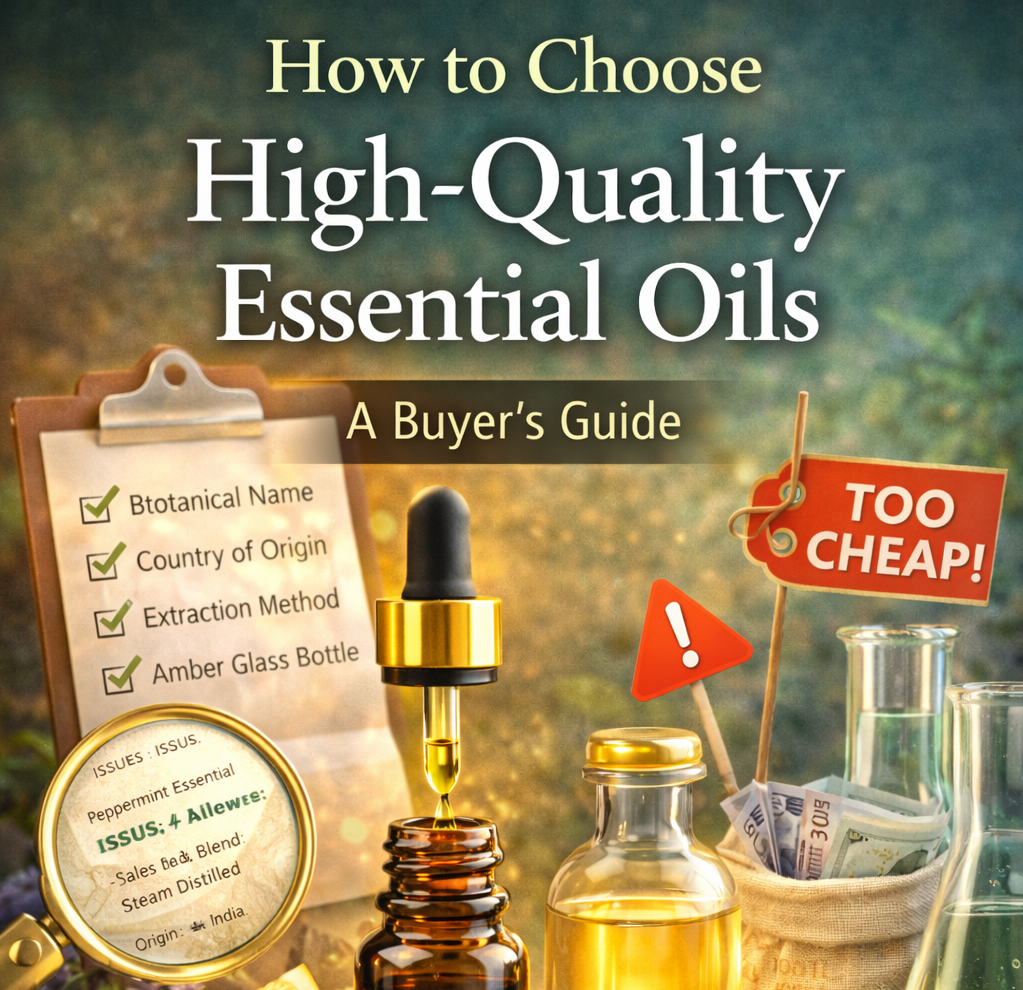
With the growing popularity of aromatherapy, essential oils are everywhere — but not all essential oils are created equal. If you’ve ever wondered why some
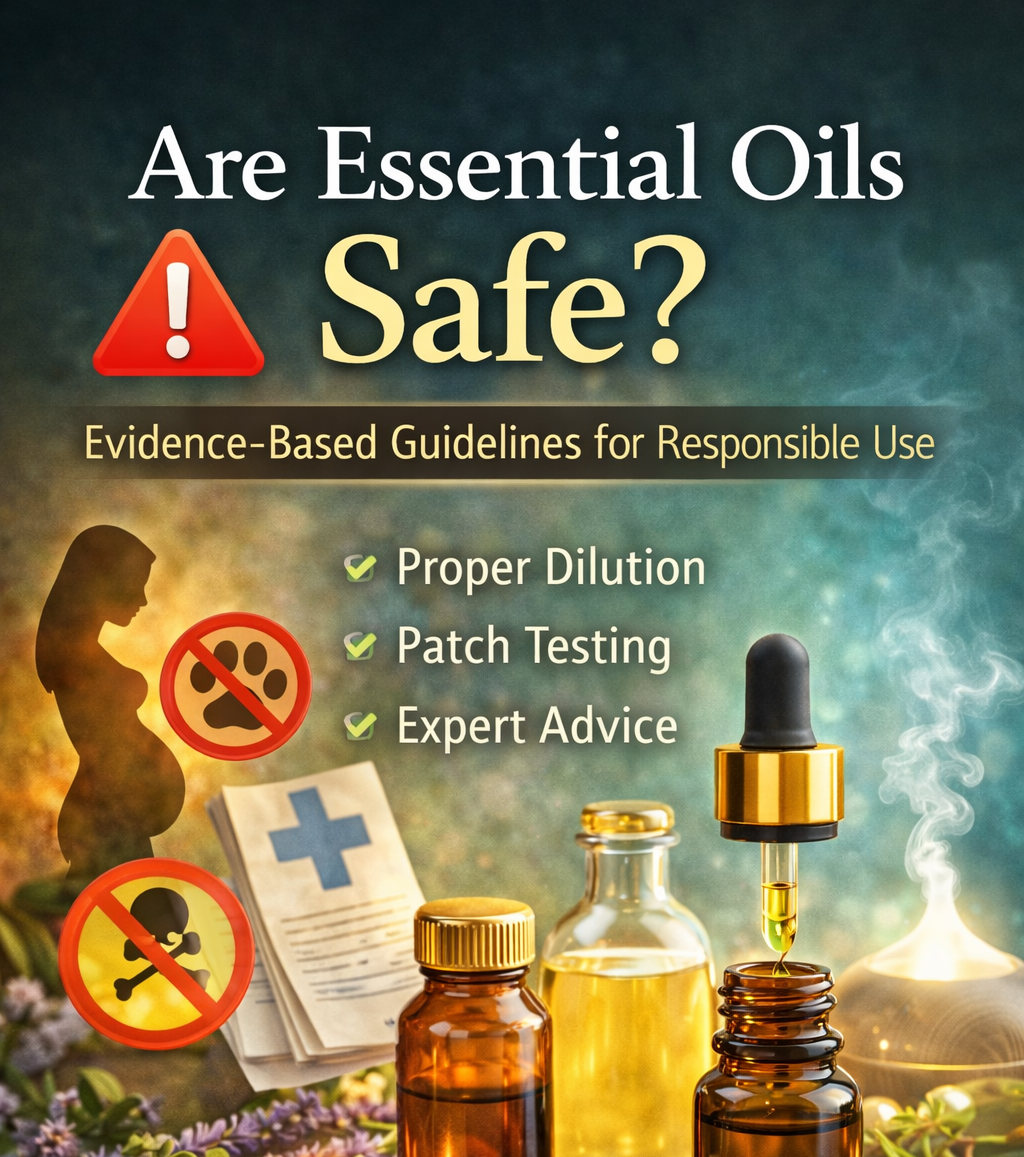
Essential oils are widely used in aromatherapy across Europe, but one of the most common and important questions remains: Are essential oils safe? The short