What Are Chakras? Complete Guide to the 7 Chakras, Meanings, Healing & Energy Balance
Chakras (Quick Summary)
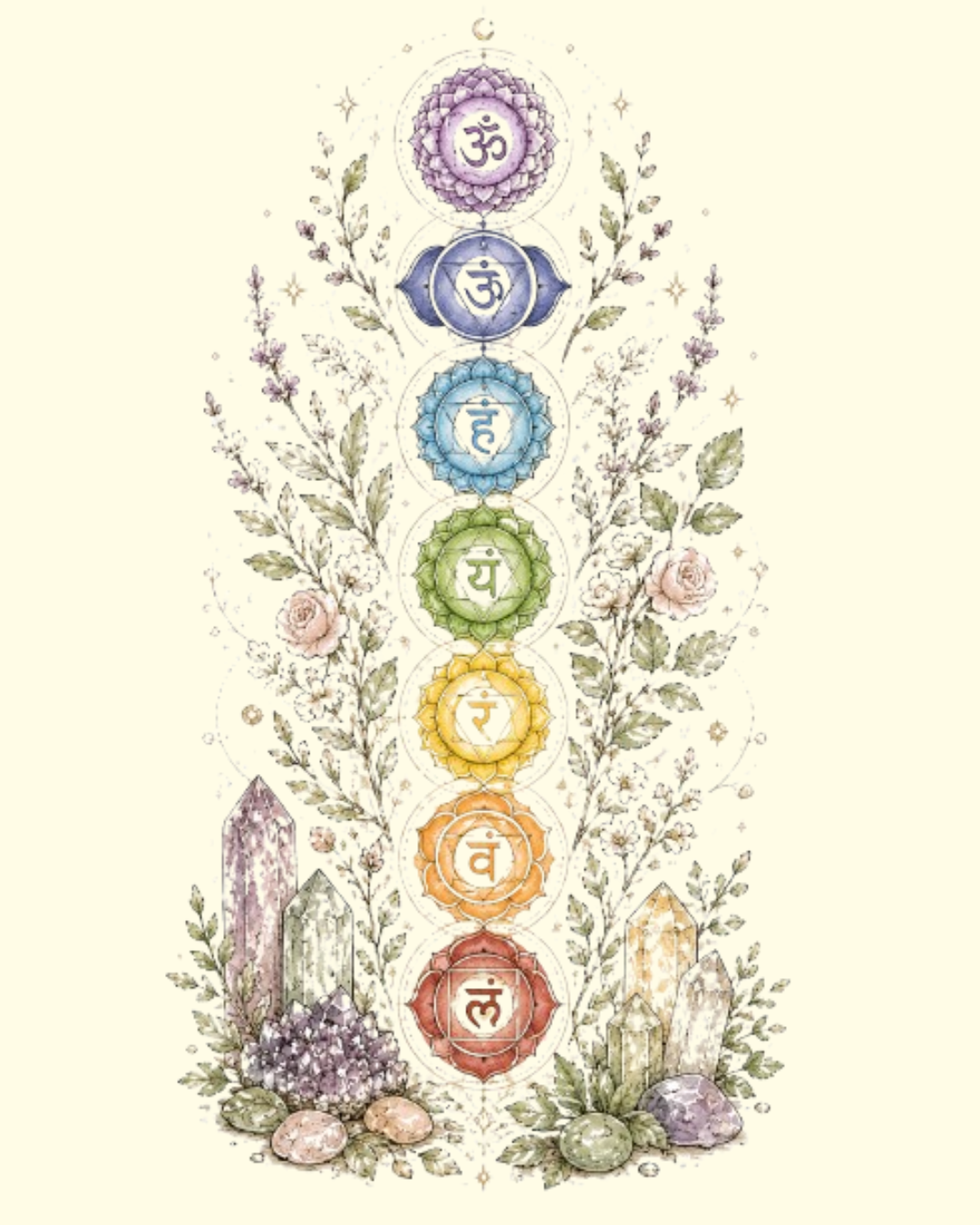
Chakras are energy centers within the body associated with physical, emotional, mental, and spiritual well-being. The chakra system originates from ancient Indian traditions and is widely used in practices such as Reiki, meditation, yoga, and holistic healing.
There are 7 main chakras aligned along the spine. Each chakra is connected to:
a specific color
a mantra
an element
emotional and spiritual functions
signs of balance or imbalance
When the chakras are balanced, energy flows harmoniously throughout the body.
What Are Chakras?
The 7 Chakras
The 7 Chakras: A Complete Guide to Energy, Healing & Spiritual Balance
For thousands of years, ancient yogic and spiritual traditions have taught that the human body contains powerful energy centers known as chakras. The word “chakra” comes from Sanskrit and translates to “wheel” or “disk,” symbolizing spinning centers of energy that influence our physical, emotional, mental, and spiritual well-being.
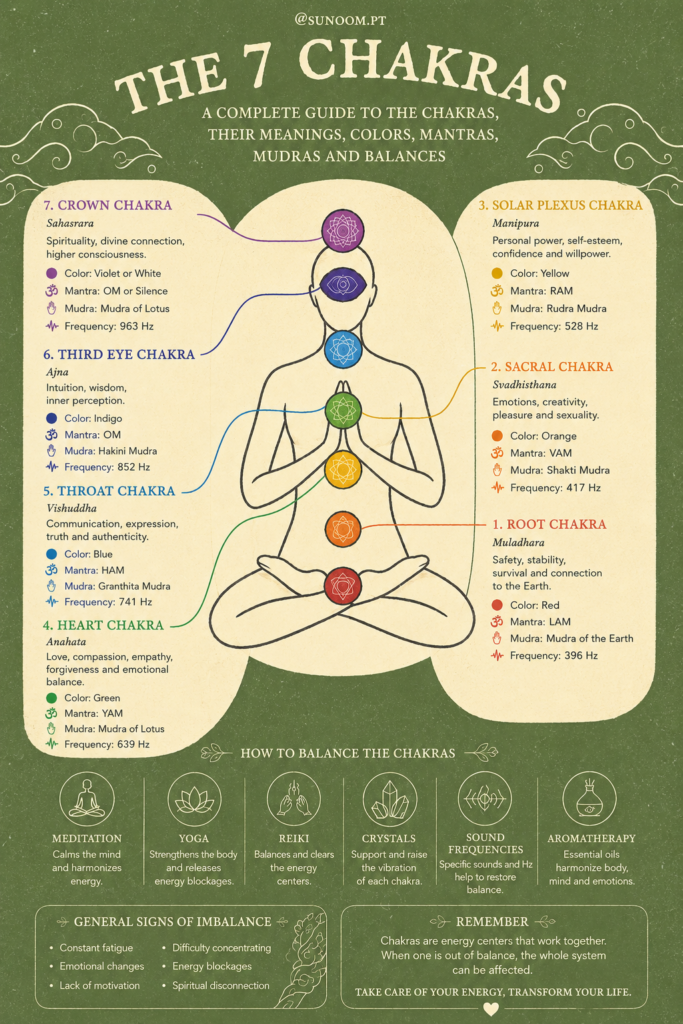
The seven main chakras are aligned along the spine, beginning at the base of the body and extending to the crown of the head. Each chakra governs specific emotions, organs, psychological patterns, spiritual lessons, colors, sounds, and energetic frequencies.
When energy flows freely through the chakras, we feel balanced, connected, emotionally stable, and spiritually aligned. When blocked or overactive, these energy centers may contribute to emotional imbalance, physical discomfort, lack of clarity, or energetic stagnation.
Understanding the chakras is not simply about spirituality — it is also a profound journey of self-awareness, healing, and inner transformation.
The word “chakra” comes from Sanskrit and means “wheel” or “circle.”
In spiritual traditions, chakras are believed to be energy centers that regulate the flow of life force energy throughout the body.
Each chakra is associated with different aspects of human experience, including:
survival
emotions
confidence
love
communication
intuition
spiritual awareness
Practices such as meditation, breathwork, yoga, and Reiki are commonly used to support chakra balance.
The 7 Main Chakras
1. Root Chakra (Muladhara)
What is the Root Chakra (Muladhara)?
Meaning & Symbolism
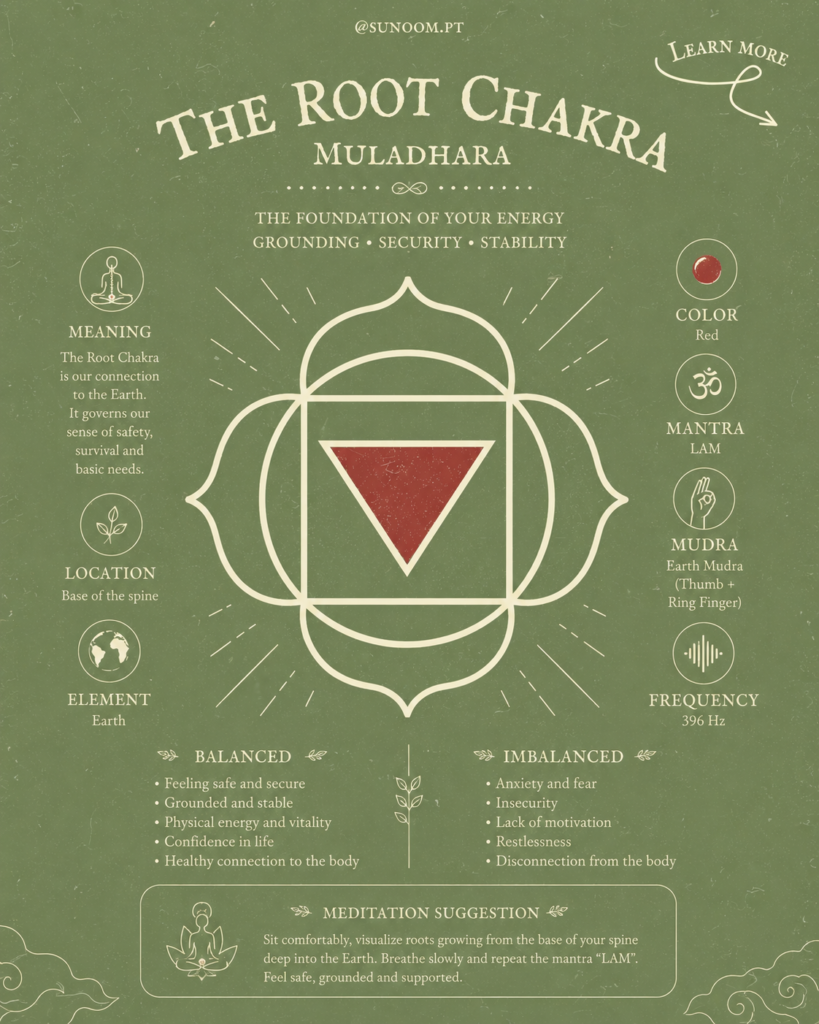
The Root Chakra, known as Muladhara in Sanskrit, is the foundation of the entire chakra system. “Mula” means root, and “Adhara” means support or base. This chakra represents grounding, survival, stability, and our connection to the physical world.
Located at the base of the spine, the Root Chakra is associated with the earth element and governs our most basic human needs: safety, shelter, food, financial stability, and emotional security.
Its symbol is a red lotus with four petals, representing stability, structure, and the four directions of life.
Emotional & Spiritual Connection
The Root Chakra influences our sense of belonging and security. When balanced, it creates feelings of safety, confidence, resilience, and trust in life.
People with a strong Root Chakra often feel: • grounded and emotionally stable • secure in relationships • financially responsible • connected to their bodies • present and calm under pressure
When blocked or imbalanced, fear becomes dominant. This may manifest as: • anxiety and chronic stress • insecurity or survival fear • financial instability • lack of trust • emotional dependency • feeling disconnected from the body
Spiritually, Muladhara teaches us that before we can spiritually expand, we must first feel safe and rooted in ourselves.
Physical Associations
The Root Chakra is connected to: • legs and feet • lower spine • adrenal glands • bones • colon and elimination system
Common physical symptoms of imbalance may include fatigue, lower back pain, digestive issues, or chronic tension.
Healing & Balancing Practices
To balance the Root Chakra: • spend time in nature • walk barefoot on the earth • practice grounding meditation • use red crystals like Red Jasper or Garnet • practice yoga poses such as Mountain Pose and Warrior Pose • focus on stability and healthy routines
Meaning
The root chakra is associated with:
safety
grounding
stability
survival
Location
Base of the spine.
Color
🔴 Red
Element
Earth
Mantra
LAM
Mudra
Earth Mudra (thumb + ring finger)
Associated Frequency
396 Hz
Signs of Balance
feeling grounded
emotional stability
physical energy
Signs of Imbalance
anxiety
fear
insecurity
lack of motivation
Recommended Meditation
Visualize roots growing from your spine deep into the Earth while repeating the mantra “LAM.”
2. Sacral Chakra (Svadhisthana)
What is the Sacral Chakra (Svadhisthan)?
Meaning & Symbolism
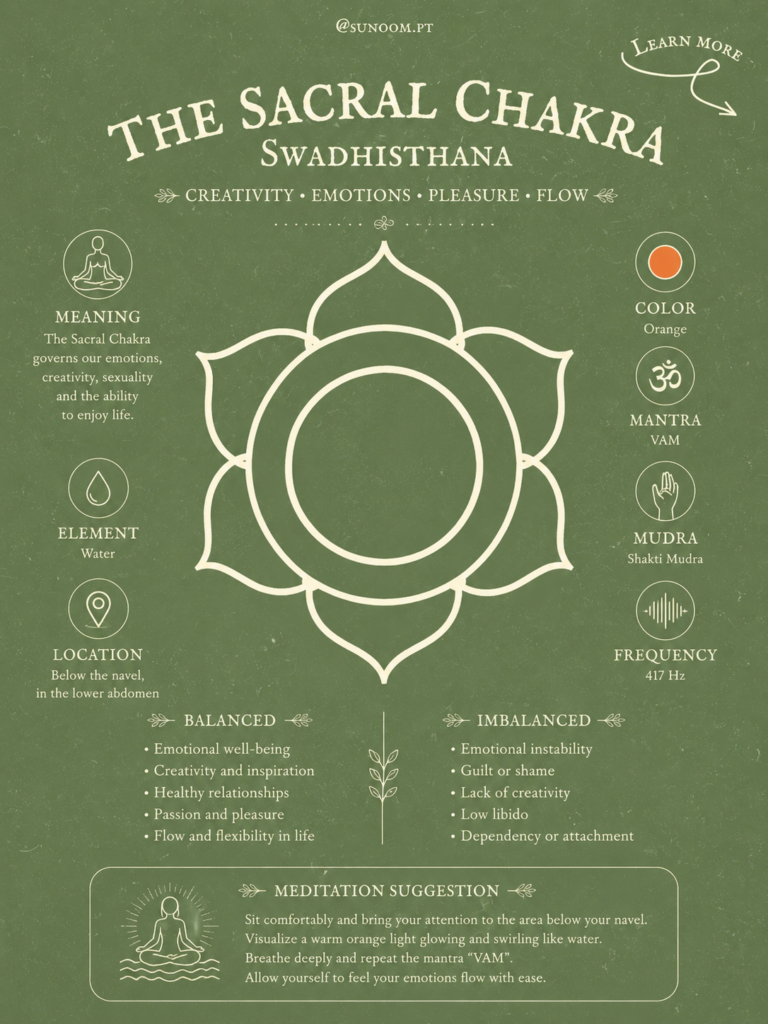
The Sacral Chakra, or Swadhisthana, is located below the navel and is associated with emotions, pleasure, sensuality, creativity, and passion.
The Sanskrit word “Swadhisthana” translates to “the dwelling place of the self.” It is deeply connected to our emotional identity and creative life force.
Associated with the water element, this chakra represents movement, flow, emotional depth, and transformation.
Its symbol is a six-petaled lotus, representing the emotional and energetic challenges we must overcome — including attachment, jealousy, anger, and fear.
Emotional & Spiritual Connection
This chakra governs our ability to feel joy, intimacy, emotional freedom, and inspiration.
When balanced, we experience: • emotional fluidity • healthy sensuality • creativity and inspiration • pleasure without guilt • emotional openness • passion for life
When blocked, emotional suppression and stagnation may appear: • fear of intimacy • emotional instability • guilt or shame • creative blocks • lack of passion • difficulty expressing emotions
Spiritually, the Sacral Chakra teaches surrender, emotional acceptance, and the ability to flow with life instead of resisting it.
Physical Associations
The Sacral Chakra is connected to: • reproductive organs • kidneys and bladder • hips and pelvis • hormones and fertility • lower abdomen
Imbalances may contribute to reproductive issues, urinary problems, hormonal imbalance, or emotional exhaustion.
Healing & Balancing Practices
To balance the Sacral Chakra: • dance and movement therapy • creative expression • emotional release work • water rituals and baths • hip-opening yoga poses • orange foods and crystals like Carnelian
Meaning
Associated with:
emotions
creativity
pleasure
sexuality
Location
Below the navel.
Color
🟠 Orange
Element
Water
Mantra
VAM
Mudra
Shakti Mudra
Associated Frequency
417 Hz
Signs of Balance
emotional flow
creativity
passion and joy
Signs of Imbalance
emotional blockages
guilt
low libido
emotional dependency
Recommended Meditation
Meditate on flowing water and emotional release.
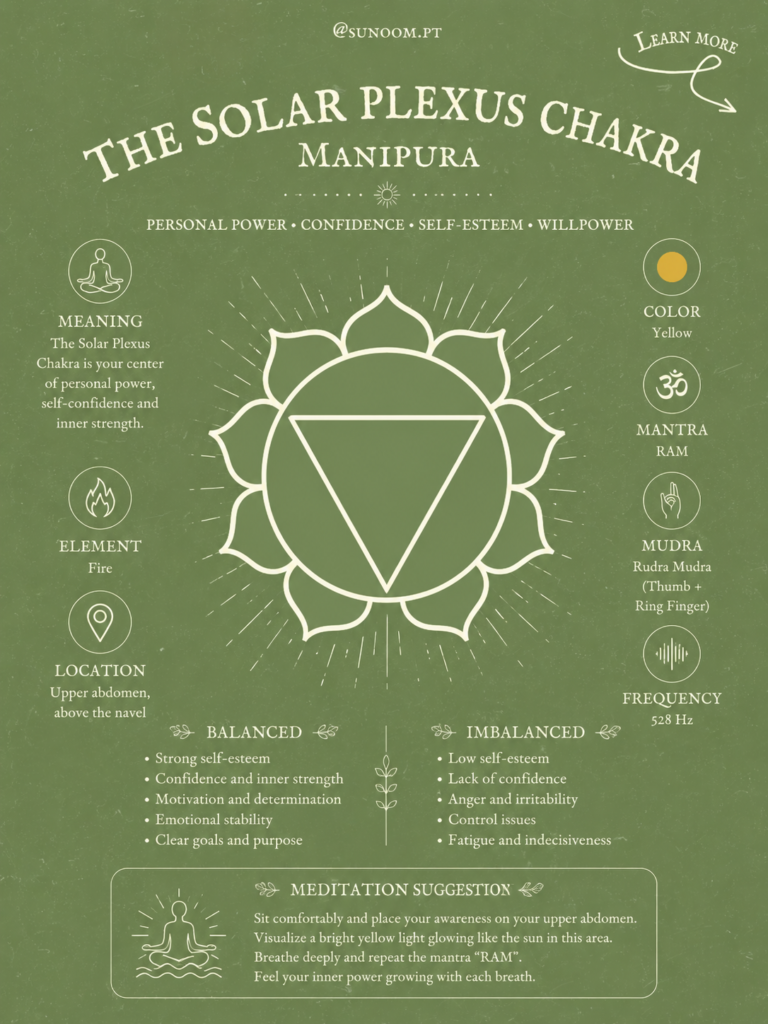
3. Solar Plexus Chakra (Manipura)
What is the Solar Plexus Chakra (Manipura)?
Meaning & Symbolism
Manipura, the Solar Plexus Chakra, is the center of personal power, confidence, discipline, and self-worth.
Located in the upper abdomen, it is associated with the fire element and represents transformation, action, and willpower.
The word “Manipura” means “city of jewels,” symbolizing the inner power and brilliance that exist within every individual.
Its symbol is a ten-petaled lotus with a downward triangle representing transformative fire energy.
Emotional & Spiritual Connection
This chakra governs self-esteem, motivation, boundaries, ambition, and personal identity.
When balanced, we feel: • confident and empowered • disciplined and motivated • emotionally strong • decisive and focused • capable of achieving goals
When imbalanced, it may create: • low self-esteem • insecurity • anger or control issues • fear of rejection • lack of direction • excessive perfectionism
Spiritually, Manipura teaches self-mastery, confidence, and personal responsibility.
Physical Associations
Connected to: • digestive system • stomach and liver • pancreas • metabolism • abdominal organs
Digestive discomfort and fatigue are often linked to Solar Plexus imbalance.
Visualize a bright golden light in your stomach area.
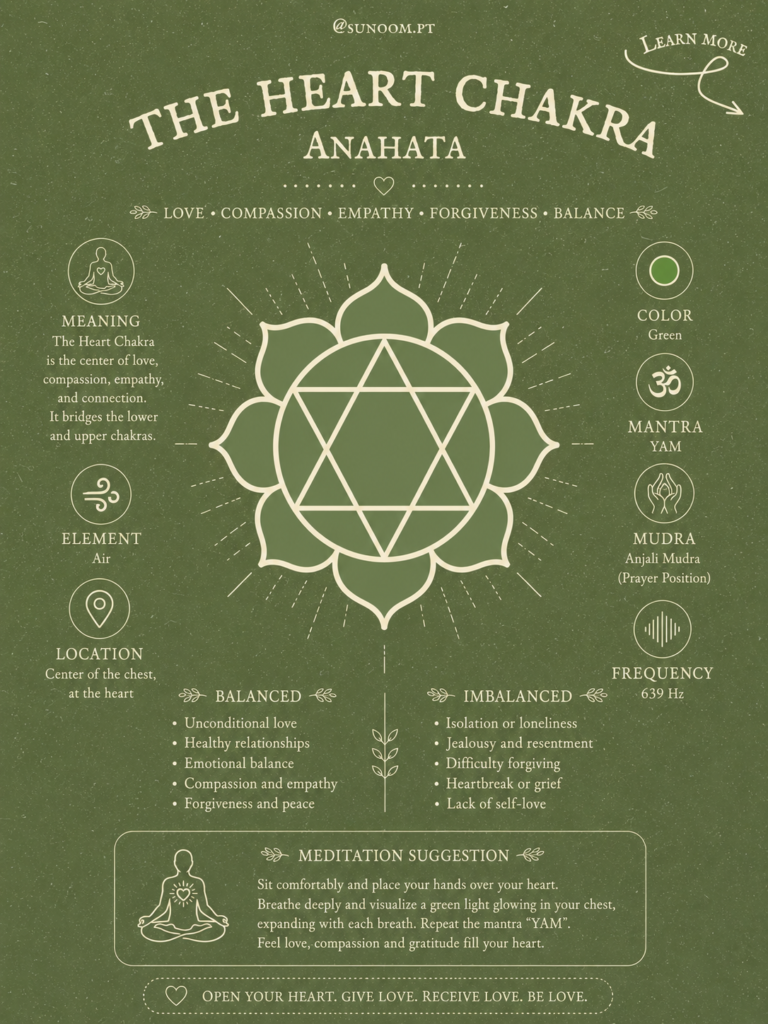
4. Heart Chakra (Anahata)
What is the Heart Chakra (Anahata)?
Meaning & Symbolism
The Heart Chakra is the energetic bridge between the physical and spiritual chakras. Located at the center of the chest, Anahata governs love, compassion, forgiveness, empathy, and emotional healing.
The word “Anahata” means “unstruck sound,” symbolizing pure, unconditional love that exists beyond fear and pain.
Its symbol is a twelve-petaled lotus containing two intersecting triangles — representing the union of masculine and feminine energies.
Emotional & Spiritual Connection
When balanced, the Heart Chakra allows us to: • love openly • forgive deeply • feel compassion • experience emotional harmony • connect authentically with others
When blocked, emotional wounds may appear as: • fear of intimacy • grief and sadness • resentment • emotional isolation • jealousy • inability to trust
Spiritually, the Heart Chakra teaches unconditional love, emotional healing, and compassion toward ourselves and others.
Physical Associations
Associated with: • heart and lungs • immune system • circulatory system • chest and shoulders
Emotional stress often manifests physically through tension or heart-related symptoms.
Healing & Balancing Practices
To support Anahata: • practice gratitude • heart-opening yoga poses • self-love rituals • forgiveness work • meditation • green crystals like Rose Quartz or Green Aventurine
Meaning
The center of:
love
compassion
empathy
forgiveness
Location
Center of the chest.
Color
🟢 Green
Element
Air
Mantra
YAM
Mudra
Lotus Mudra
Associated Frequency
639 Hz
Signs of Balance
self-love
healthy relationships
emotional openness
Signs of Imbalance
sadness
resentment
emotional isolation
Recommended Meditation
Practice gratitude while breathing deeply into the chest.
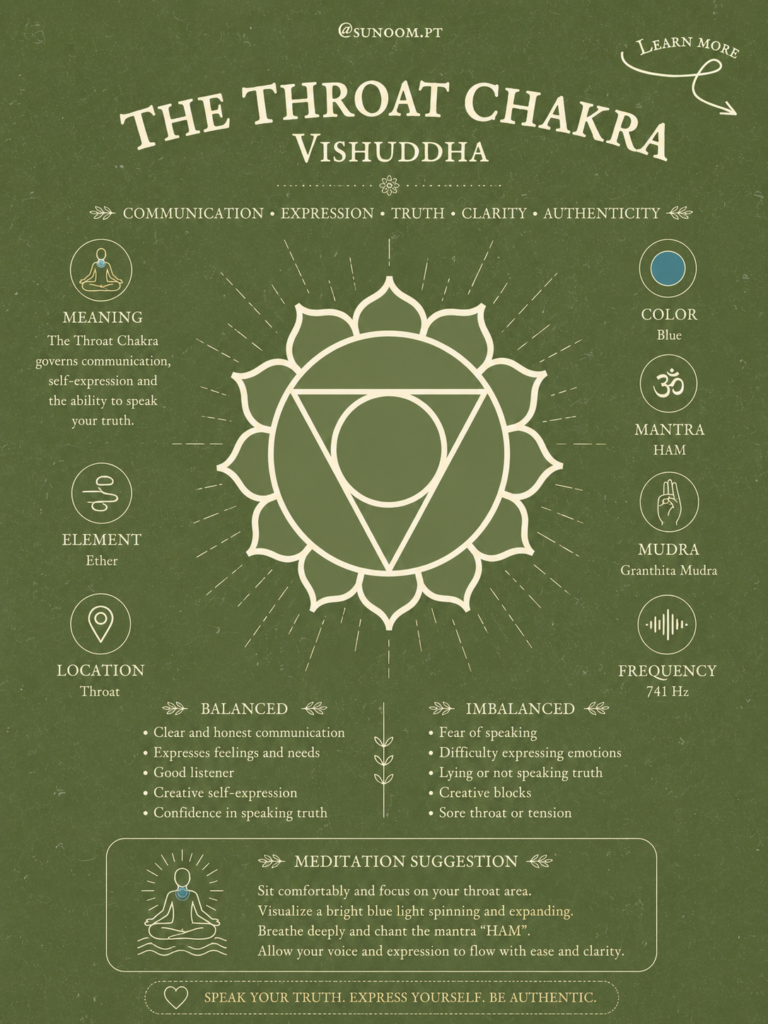
5. Throat Chakra (Vishuddha)
What is the Throat Chakra (Vishuddha)?
The Throat Chakra governs communication, authenticity, truth, and self-expression. Located in the throat area, Vishuddha is associated with the ether element — the energetic space where vibration and sound exist.
When balanced, it allows honest communication, creativity, active listening, and authentic expression.
When blocked, individuals may experience: • fear of speaking • social anxiety • difficulty expressing emotions • dishonesty toward oneself • feeling unheard
Physically, it connects to: • throat • vocal cords • thyroid gland • mouth and jaw
Balancing practices include chanting, journaling, singing, breathwork, and speaking personal truths openly.
Meaning
Associated with:
communication
self-expression
truth
Location
Throat.
Color
🔵 Blue
Element
Ether
Mantra
HAM
Mudra
Granthita Mudra
Associated Frequency
741 Hz
Signs of Balance
honest communication
authenticity
creative expression
Signs of Imbalance
fear of speaking
communication difficulties
creative blocks
Recommended Meditation
Slowly chant the mantra “HAM” while focusing on the throat.
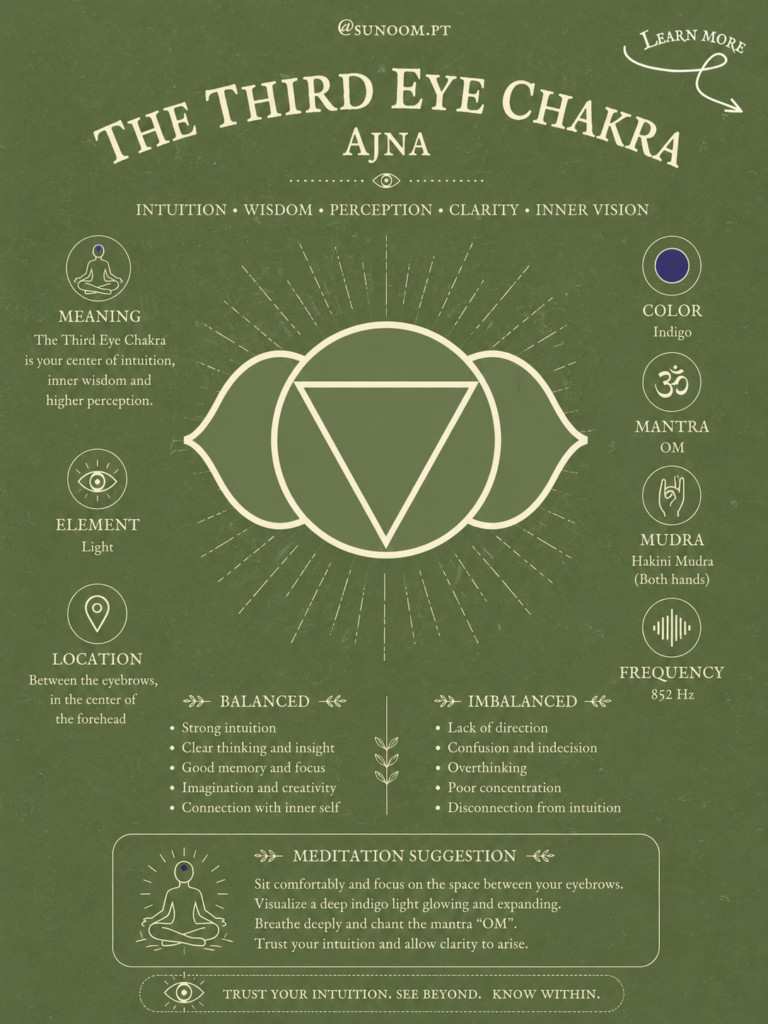
6. Third Eye Chakra (Ajna)
What is the Third eye Chakra (Ajna)?
The Third Eye Chakra is the center of intuition, insight, imagination, and spiritual awareness. Located between the eyebrows, Ajna governs perception beyond the physical senses.
When balanced, it strengthens: • intuition • mental clarity • imagination • spiritual wisdom • inner guidance
When imbalanced, symptoms may include: • overthinking • confusion • lack of direction • disconnection from intuition • mental exhaustion
Ajna is associated with the pineal gland and the element of light.
Practices that support this chakra include meditation, visualization, mindfulness, dream journaling, and reducing mental overstimulation.
Meaning
Connected to:
intuition
wisdom
inner vision
Location
Between the eyebrows.
Color
🟣 Indigo
Element
Light
Mantra
OM
Mudra
Hakini Mudra
Associated Frequency
852 Hz
Signs of Balance
intuition
mental clarity
spiritual awareness
Signs of Imbalance
confusion
overthinking
disconnection from intuition
Recommended Meditation
Focus attention on the space between the eyebrows while breathing slowly.
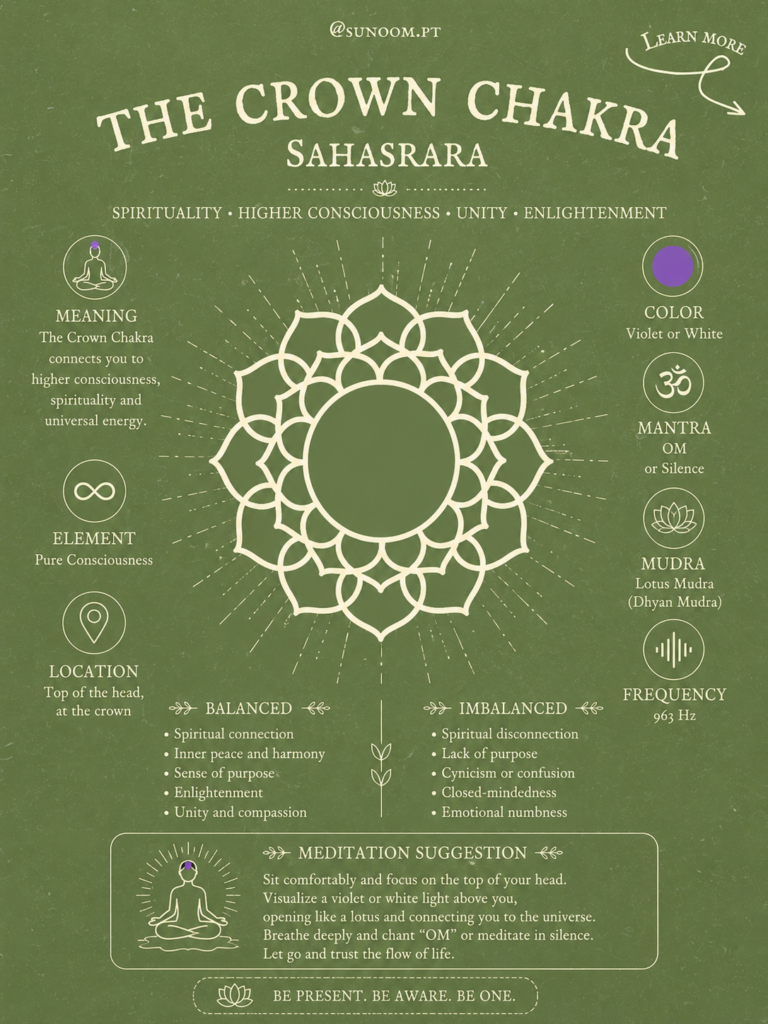
7. Crown Chakra (Sahasrara)
What is the Crown Chakra (Sahasrara)?
The Crown Chakra represents enlightenment, spiritual connection, divine wisdom, and universal consciousness. Located at the top of the head, Sahasrara is considered the highest chakra in the energetic system.
Its name means “thousand-petaled lotus,” symbolizing infinite spiritual expansion and awakening.
When balanced, we experience: • inner peace • spiritual connection • clarity and wisdom • trust in life • expanded consciousness
When blocked, individuals may feel: • disconnected from spirituality • emotionally numb • purposeless • isolated or spiritually lost
The Crown Chakra is associated with silence, meditation, and pure consciousness.
Healing practices include: • deep meditation • mindfulness • spiritual study • prayer • silence and stillness • violet or clear crystals like Amethyst and Clear Quartz
Meaning
Associated with:
spirituality
higher consciousness
universal connection
Location
Top of the head.
Color
⚪ White or violet
Element
Pure consciousness
Mantra
Silence or “OM”
Mudra
Lotus Mudra
Associated Frequency
963 Hz
Signs of Balance
inner peace
spiritual connection
expanded awareness
Signs of Imbalance
spiritual disconnection
lack of purpose
emotional numbness
Recommended Meditation
Practice silent meditation while focusing on presence and awareness.
What Can Block the Chakras?
Factors often associated with chakra imbalances include:
chronic stress
emotional trauma
negative thought patterns
emotional suppression
unhealthy lifestyle habits
Holistic practices aim to restore energetic balance and harmony.
How to Balance the Chakras
Common Chakra Healing Practices
✔ Meditation
✔ Yoga
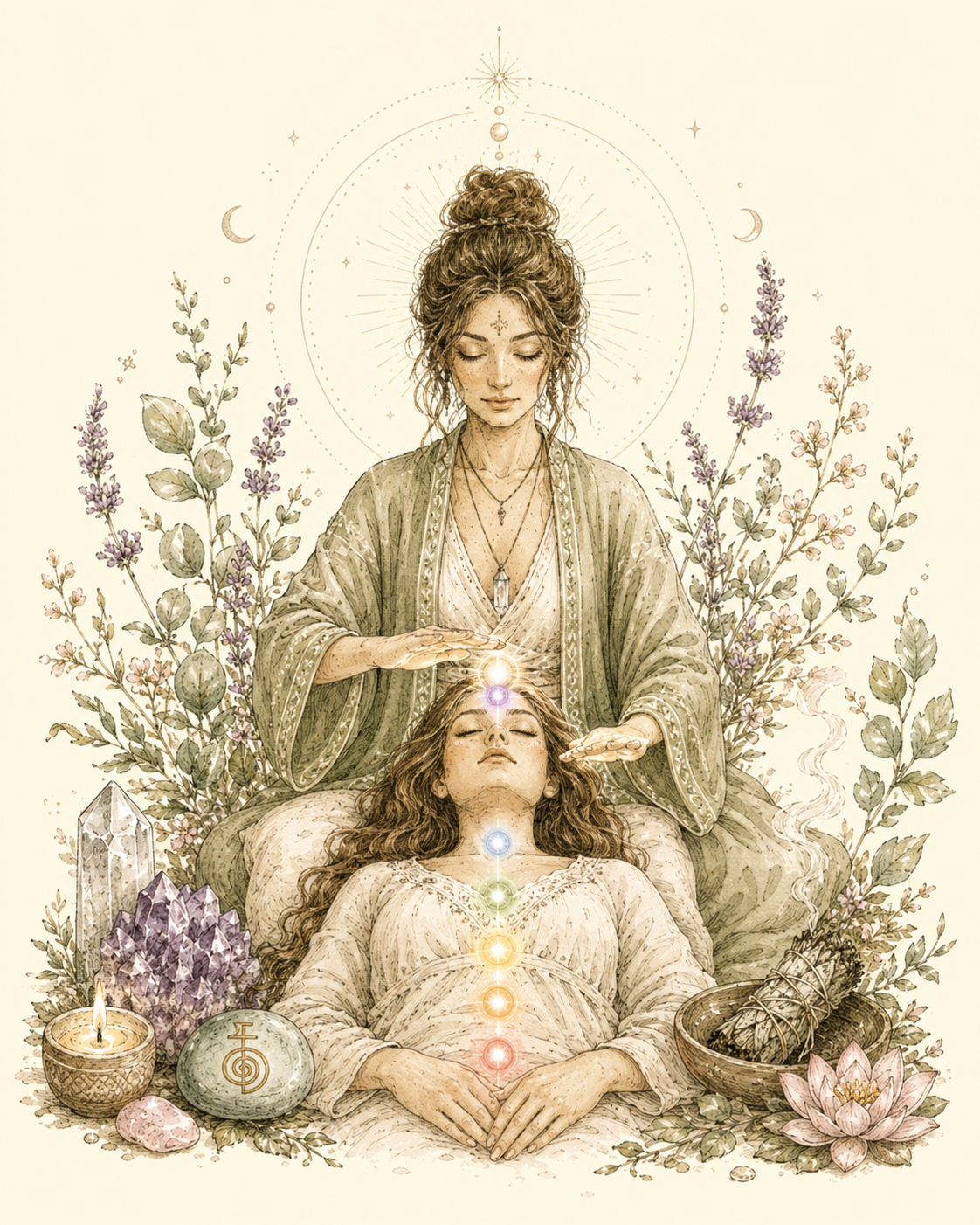
✔ Reiki
✔ Breathwork
✔ Sound frequencies
✔ Crystals
✔ Aromatherapy
✔ Positive affirmations
Chakra Frequencies (Hz)
Many spiritual practices associate specific sound frequencies with each chakra.
Chakra
Frequency
Root Chakra
396 Hz
Sacral Chakra
417 Hz
Solar Plexus Chakra
528 Hz
Heart Chakra
639 Hz
Throat Chakra
741 Hz
Third Eye Chakra
852 Hz
Crown Chakra
963 Hz
These frequencies are commonly used in meditation music and sound healing practices.
Crystals Associated with Chakras
Chakra
Crystal
Root Chakra
Red Jasper
Sacral Chakra
Carnelian
Solar Plexus Chakra
Citrine
Heart Chakra
Rose Quartz
Throat Chakra
Aquamarine
Third Eye Chakra
Amethyst
Crown Chakra
Clear Quartz
Frequently Asked Questions
Are chakras scientifically proven?
Chakras are part of ancient spiritual and holistic traditions. They are not recognized by conventional medicine as physical structures, but many people use chakra-related practices for emotional and spiritual well-being.
How do you know if a chakra is blocked?
Some people associate emotional, physical, or energetic discomfort with chakra imbalances.
Which chakra should beginners focus on first?
The root chakra is often considered the foundation of the chakra system and a common starting point for beginners.
Conclusion
The chakra system offers a holistic framework for understanding the relationship between the body, mind, emotions, and spirit. Whether approached spiritually, psychologically, or symbolically, the chakras provide valuable insight into patterns of healing, growth, emotional balance, and self-awareness.
Balancing the chakras is not about perfection — it is about awareness, alignment, and learning to flow with life more consciously.
As many modern wellness practitioners and yoga traditions emphasize, chakra work can support emotional well-being, mindfulness, meditation, and self-discovery when practiced intentionally and with balance.
You can find more content like this on www.sunoom.pt . Make sure to help this project grow, you can help us giving your follow on our social media, or shop at our store. In any case, we appreciate it. See you soon.
Introduction Over the years, I have had the privilege of supporting many individuals on their wellness journeys through Reiki. Some people arrive with a deep
Meditation has been practiced for thousands of years across different cultures and spiritual traditions. Today, it is recognized not only as a spiritual tool but
Holistic Health (Quick Summary) Holistic health is an approach to wellness that focuses on the whole person—mind, body, and spirit—rather than just treating symptoms. It
Cancer treatments such as chemotherapy, radiation therapy, and infusion therapies can bring a range of challenging side effects. Many patients undergoing treatment experience nausea, anxiety,
Dermatitis is a common inflammatory skin condition that affects millions of people worldwide. It can cause redness, itching, dryness, irritation, and inflammation, often making the